If you’ve ever watched a bearing ring former operate, you might have seen a heavy, cylindrical metal tool slam into a hot steel billet at just the right moment. That’s the punch—and it’s not just a “stamping tool” most people think it is. As a supplier of bearing ring formers, I’ve spent hundreds of hours walking through shop floors with machinists and quality inspectors, troubleshooting why a batch of bearings came out rounder or more durable than the last. More often than not, the answer circled back to how the punch was sized, tempered, and aligned. It’s the unsung hero that turns a simple steel slug into a precision component that lets an airplane’s engine spin or a factory’s conveyor belt run 24/7. Let’s break down exactly what it does, why it matters, and how we design punches to make your bearing rings hold up. Bearing Ring Former
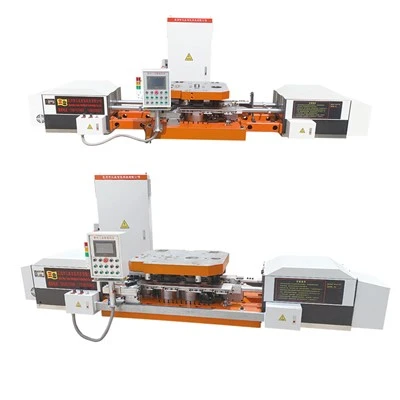
First, let’s start with the basics: a bearing ring former’s job is to shape a solid steel billet into a ring—a hollow, circular part with consistent wall thickness, uniform diameter, and precise dimensions. The process starts with heating a carbon steel or alloy steel billet to around 1,100 to 1,200 degrees Celsius, which makes it malleable enough to deform without cracking. Once the billet is loaded into the former’s die set, the punch moves forward into the center of the hot metal. At first glance, that action just makes a hole, but it’s far more complex. The punch doesn’t just pierce the metal—it controls the material flow, which is the backbone of bearing ring quality.
When hot steel is deformed, it doesn’t just bend; it flows in specific directions based on the pressure applied and the tooling that guides it. If a punch is the wrong diameter, the material will flow unevenly. For example, if the punch is too small, the inner diameter of the ring will be under-sized, and excess material will bunch up on the outer wall. If it’s too large, the inner diameter will be oversized, and you’ll waste time machining extra steel later. But here’s the thing: the punch doesn’t just set the inner diameter. It also creates the uniform wall thickness that’s critical for bearing performance. A consistent wall thickness means the ring will withstand equal stress from rolling elements (balls or rollers) around its entire circumference, preventing premature wear or failure. We calculate punch diameter by factoring in the billet’s initial size, the desired inner diameter, and the material’s shrinkage rate as it cools. Most of our clients bring us their blueprint specs, but we always run a quick simulation to adjust for real-world shop conditions—like minor variations in billet heating or machine wear.
Next, the punch shapes the ring’s cross-section profile. Modern bearing rings aren’t just simple circles; many have subtle features like chamfers on the inner or outer edges, or grooves for seals that keep lubricant in and contaminants out. The punch’s tip is machined to match these features, so when it pushes into the hot billet, it forms those details as the material flows. Take a tapered roller bearing ring, for example: the inner ring has a tapered profile to accommodate the angled rollers that handle both radial and thrust loads. The punch’s tapered end presses the hot steel into the die’s matching taper, ensuring the entire cross-section is consistent. If the punch’s taper is off by even a degree, the rollers won’t seat properly, leading to noise, vibration, or even catastrophic failure during operation. We work with bearing engineers to get these profiles right, because a punch that’s mismatched can cost our clients thousands in scrapped parts or warranty claims later.
Another key function of the punch is work hardening the inner surface of the bearing ring. Work hardening is a process where repeated deformation makes a metal harder and more resistant to wear. When the punch strikes the hot billet, it applies localized pressure to the inner wall, compressing the steel grains and creating a denser, harder surface. This is crucial because the inner surface of the bearing ring is where the rolling elements make contact; a harder surface means the ring will last longer, even under high loads. But there’s a balance here—too much pressure from a punch that’s moving too fast or is too hard can cause the inner surface to crack, especially in alloy steels that are more brittle when hot. That’s why we design punches with specific hardness levels: most are made from tool steel like H13, which is tempered to around 48 to 52 HRC (Rockwell hardness C). This is hard enough to create beneficial work hardening, but flexible enough to avoid chipping or cracking during operation. We also coat some punches with materials like TiN (titanium nitride) or TiCN (titanium carbonitride) to reduce friction between the punch and the hot steel, which prevents material from sticking to the punch and leaving defects on the ring’s inner surface.
Alignment is a function we can’t overlook, and it’s directly tied to the punch’s function. If the punch isn’t perfectly aligned with the die in the former, the force it applies will be uneven. This causes the hot billet to shift, leading to a lopsided ring—one side of the wall is thicker than the other, or the inner diameter is eccentric. Eccentricity is a big problem for bearings, because it makes the rotation uneven, leading to vibration and reduced lifespan. As a supplier, we recommend that our clients align their former’s punch and die every time they change a punch—even a small misalignment of 0.1 millimeters can lead to hundreds of defective rings in a production run. We also build alignment features into the punches themselves, like precision-machined pilot ends that fit into the die’s center hole, making it easier for machinists to get the alignment right on the first try.
Now, let’s talk about common issues that show when a punch isn’t doing its job. I’ve seen clients bring us former punches that were worn down too much, and the results were messy. A worn punch has a rounded tip, so it doesn’t cut or shape the hot steel cleanly. This leads to burrs on the inner edge of the ring, which require extra machining to remove. In some cases, the burrs can break off during operation, contaminating the bearing’s lubricant and causing damage to the entire assembly. Another common issue is punch wear from repeated use: over time, the friction from hot steel and pressure causes the punch’s surface to degrade, leading to inconsistent dimensions. We recommend replacing punches every 10,000 to 15,000 cycles, depending on the type of bearing ring being produced. For high-volume runs of small bearings, the punch will wear faster, while for larger, heavy-duty bearing rings, the punch lasts longer because the number of cycles is lower.
We also specialize in custom punches for unique applications. Not all bearing rings are the same—some are for wind turbine gearboxes that weigh thousands of pounds, others for medical devices where precision is measured in microns, and some for aerospace engines that operate at extreme temperatures. For a wind turbine bearing ring, the punch needs to be extra durable, because the ring has to withstand enormous loads. We use a thicker tool steel billet for these punches, and we temper them at a lower temperature to increase toughness. For medical bearing rings, the punch has to produce a super-smooth inner surface with no defects, so we add a polishing step to the punch’s surface after machining to reduce friction and material adhesion. For aerospace bearings, which use specialty alloys like titanium, the punch has to be designed to handle titanium’s lower ductility when hot, so we adjust the punch’s speed and pressure to avoid cracking the metal.
As a supplier, we don’t just sell punches—we work with our clients to optimize the entire forming process. For example, a few months ago, a client was producing deep groove ball bearings and having trouble with inner diameter consistency. Their existing punch was sized to the blueprint’s nominal dimension, but we ran a simulation that showed the hot steel would shrink 0.2 millimeters as it cooled. We adjusted the punch’s diameter to account for that shrinkage, and their inner diameter consistency went from 92% good parts to 99.5%. Another client was making tapered roller bearings and had issues with chamfer defects; we modified the punch’s tip geometry to match the exact chamfer profile they needed, eliminating 100% of the chamfer-related defects in their production runs.
It’s also important to mention that the punch works in tandem with other parts of the bearing ring former—like the ram that moves it, the die that holds the billet, and the lubrication system that cools the punch. If the punch is too hot, it can transfer heat to the billet unevenly, leading to inconsistent material flow. That’s why we design punches with internal cooling channels for high-volume operations, so we can maintain a consistent temperature and avoid overheating. The cooling channels also help extend the punch’s lifespan, because they reduce thermal fatigue from repeated heating and cooling.
I’ve been in this industry for 18 years, and one thing I’ve learned is that even the smallest component in a bearing former can have a huge impact on the final product. I once worked with a shop that was producing aircraft engine bearings, and they were rejecting 5% of their rings because of inner surface cracks. After testing, we found their punch was made from a steel that was too brittle, and it was applying too much localized pressure. We switched them to a H13 tool steel punch with a slight taper on the tip to distribute pressure more evenly, and their rejection rate dropped to less than 0.5%. That’s the difference a well-designed punch makes—on one hand, it’s a simple tool, but on the other, it’s a critical part of ensuring the bearings that keep the world moving are safe and reliable.
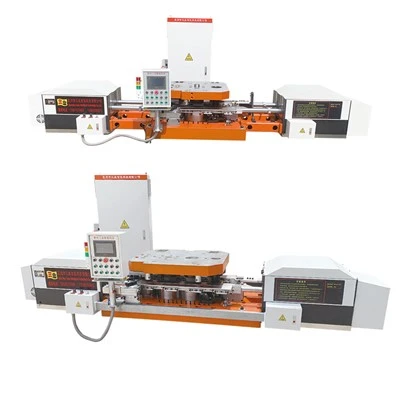
If you’re working with a bearing ring former and noticing inconsistent inner diameters, wall thickness issues, surface defects, or high rejection rates, chances are the punch is the root of the problem. We design and manufacture punches tailored to your specific bearing ring applications, from small medical bearings to heavy industrial ones. We offer custom machining, hardness testing, and even on-site support to help you get the most out of your bearing ring former. Don’t let a worn or misdesigned punch derail your production or compromise the quality of your bearings. Reach out to our team to discuss your requirements, and we’ll help you find the right punch for your operation.
Busher Former Machine References:
- Kalpakjian, S., & Schmid, S. R. (2014). Manufacturing Processes for Engineering Materials. Pearson Education.
- Todd, R. H., Allen, D. K., & Alting, L. (1994). Manufacturing Processes and Equipment. Prentice Hall.
- Davies, J. R. (2010). Tool Steels: A Practical Guide for Designers and Users. ASM International.
- Bol Jan, W., & Kopp, R. (2000). Metal Forming: Fundamentals and Applications. Elsevier.
Quanzhou Sanye Intelligent Technology Co., Ltd.
As one of the most professional bearing ring former manufacturers and suppliers in China, we have world-leading production equipment and strong manufacturing capabilities. Please rest assured to buy customized bearing ring former made in China here from our factory. Welcome to contact us for quotation.
Address: Anhai Town, Jinjiang City, Fujian Province, China
E-mail: jack_tmm@163.com
WebSite: https://www.qzsymanipulator.com/
