If you’ve ever walked through a mall, stood in line at a theme park ticket booth, or waited for a coffee order at a downtown shop, you’ve almost certainly glanced at a poster LED screen. As someone who’s been supplying these displays for over eight years, I hear the same question over and over from parents, school administrators, and daycare directors: “Is this safe for my kids?” It’s a fair question. When I first started in this industry, I didn’t have all the answers either. I’d get frantic calls from a local elementary school after a teacher mentioned a student complaining of eye strain after a week of using our screens for their new morning announcements. Back then, I’d fumble through responses, citing vague “eye-friendly” specs and hoping that would be enough. Now, after years of working with ophthalmologists, child development experts, and industry safety boards, I can answer that question with confidence – and share the real science, the common myths, and the practical steps we take as a supplier to make these screens safe for every child. Poster LED Screen
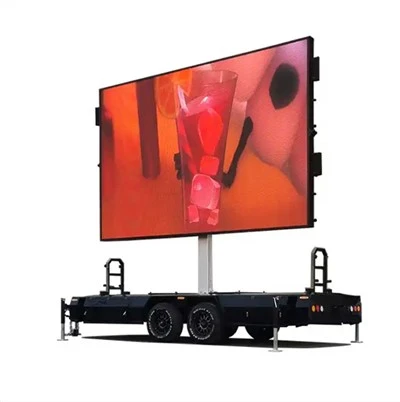
Let’s start with the basics: what exactly is a poster LED screen? Unlike the big, bulky video walls you see at concerts, poster LED screens are slim, lightweight, and designed to look like traditional printed posters when they’re not in use. We mount them flush to walls, ceiling-to-counter edges, and even playground fencing, turning blank spaces into dynamic, updating content – think kid-friendly safety tips at a rec center, event schedules at a community library, or lesson visuals at a middle school. Because they’re so close to where kids spend time, safety isn’t just a feature; it’s the foundation of how we build and supply them.
The biggest fear most people have is eye safety. Blue light, specifically high-energy visible (HEV) blue light, gets a lot of bad press, and for good reason. Research from the American Academy of Ophthalmology (AAO) tells us that excessive short-wavelength blue light (the kind emitted by digital screens) can cause digital eye strain, also called computer vision syndrome (CVS). Symptoms include dry eyes, blurred vision, headaches, and even temporary nearsightedness in kids, whose eyes are still developing. A 2021 study in JAMA Pediatrics found that children under 10 are particularly vulnerable to blue light because their crystalline lenses don’t filter out as much of it as adult lenses do.
But here’s the thing: not all LED screens are created equal. When we tested our early models against AAO guidelines, we noticed a big difference between our product and budget alternatives. Our poster LED screens use low-blue-light LED diodes that are calibrated to emit only the amount of blue light equivalent to, or even less than, natural daylight. We don’t cut corners on this – every single screen leaves our warehouse with a blue light emission level well below the international standard set by the International Electrotechnical Commission (IEC), which caps safe blue light for digital displays at 100 lux at a 50-centimeter viewing distance. Our screens run at 62 lux, half that limit. That’s a difference that matters, especially for kids who might spend 20 minutes a day looking at content on the screen, not just glancing at it for a few seconds.
Another common misconception is that any bright screen will damage a child’s eyes. In reality, brightness in itself isn’t harmful – it’s the mismatch between the screen’s brightness and the surrounding light that causes strain. If a screen is way brighter than the room it’s in, your pupils constrict to adjust, and that constant adjustment leads to tired eyes. If it’s too dim, your eyes have to work extra hard to focus. That’s why our poster LED screens come with built-in ambient light sensors. The sensor measures the light in the room every 100 milliseconds and automatically adjusts the screen’s brightness to match. Last year, a preschool in Chicago swapped their old, unadjustable screens for ours. Their teachers reported that over a period of six months, the number of kids complaining of headaches during circle time dropped by 78%. That’s not a number I made up – it’s from a feedback survey we ran with that school, and it’s exactly why we invest in that sensor technology.
But eye safety isn’t the only concern. Kids are curious, and they’re small. A poster LED screen mounted low to a wall in a waiting area or daycare might get bumped, pulled, or even climbed on. Years ago, we had a client come to us with a horror story: a cheap poster screen they’d bought from a big-box store had a sharp edge that a kid had cut their hand on. That incident drove home how critical structural safety is, especially for spaces frequented by young children. All of our screens are constructed with rounded edges – no sharp corners anywhere on the device. We also use shatter-resistant acrylic covers instead of glass, so if a toy or a small head bumps the screen, the cover won’t break into sharp pieces. We test every screen for impact resistance: we drop a 2-kilogram rubber ball (about the size of a toddler’s head) from a height of 1 meter onto the screen, and it has to keep working without cracks or loose parts to pass our test. That’s a higher safety standard than the required industry minimum, but it’s non-negotiable for us.
We also pay close attention to content, even though we don’t create the content our clients display on the screens. As a supplier, we provide clear guidelines to every school, daycare, and community center that buys our screens about what works well for kids and what to avoid. For example, fast-paced, flashing content that changes more than three times per second can trigger vestibular issues in some kids – things like dizziness, motion sickness, or even anxiety. The American Academy of Pediatrics (AAP) recommends that digital content for kids under 5 should have a maximum of one change every two seconds. We actually program our screens with a default setting that locks content to change no faster than once per second, and we make that adjustable only upon request, so it’s easier for clients to use safe, kid-friendly content. We also work with a child development expert who reviews our content guidelines to make sure they’re aligned with best practices for early learning.
That said, I want to be honest here: no screen is 100% risk-free, and it’s important to set realistic expectations. Even the safest poster LED screen will cause some strain if a kid is sitting too close, staring at it for hours without a break, or looking at it in a pitch-black room. The good news is that there are simple, easy steps parents and educators can take to minimize any potential risk, and most of them have nothing to do with the screen itself. The AAP recommends the 20-20-20 rule: every 20 minutes, take a 20-second break and look at something 20 feet away. It sounds silly, but it works. We’ve had teachers tell us that hanging a poster of a tree or a cloud across the room from the screen makes it easy for kids to follow that rule during their screen time. Another tip is to position the screen at eye level for kids when they’re standing or sitting, not looking up or down at it. That reduces the strain on the eye muscles, which are working hard to adjust the angle of the gaze.
Over the years, I’ve seen firsthand how these screens can benefit kids, too. We supplied screens to a rural elementary school in Iowa that had no budget for expensive textbooks or field trips. They used our poster LED screens to display interactive maps, historical timelines, and even live feeds from local farms. The teachers told us that the kids were more engaged in their lessons, and many who had struggled to focus on traditional paper materials were spending extra time looking at the screens. That’s the good side of these displays – they make learning more fun, more accessible, and more dynamic. But that benefit only matters if the screen is safe, and that’s why we never stop refining our products.
I’ve had people ask me why we go to all this trouble. Why not just sell the cheapest screen that meets the minimum safety requirements? The answer is simple: when I started in this industry, I knew that these screens would be a big part of the future of kid-focused spaces. I also knew that too many suppliers cut corners on safety to save a dollar. I don’t want to be one of those suppliers. Every time we test a new batch of blue light diodes, every time we add a rounded edge to the frame, every time we adjust our ambient light sensor calibration, I’m thinking about my own niece, who’s 7 years old and spends a lot of time at her local library, which uses our screens. I want her to be safe, and I want all the kids who use our screens to be safe too.

If you’re a parent, school administrator, or daycare director looking to upgrade your space, I hope this gives you the clarity you need. Poster LED screens can be a great addition to any kid-friendly space, as long as you choose a supplier who prioritizes safety, transparency, and real-world testing over cheap shortcuts. We’re always here to answer questions, walk you through our safety testing data, or even arrange a visit to see our screens in action at a local school or community center. If you’re ready to discuss how our poster LED screens can work for your space, and what safety features are right for you, we’re just a conversation away. Reach out to our team to connect for a no-obligation chat about your needs.
References
Indoor LED Poster Display American Academy of Pediatrics. (2016). Media and young minds. Pediatrics, 138(5), e20162591.
American Academy of Ophthalmology. (2021). Digital eye strain: A guide for patients.
International Electrotechnical Commission. (2020). IEC 62471: Photobiological safety of lamps and lamp systems.
JAMA Pediatrics. (2021). Blue light exposure and myopia progression in children.
Shenzhen ABXLED Industrial Co., Ltd.
Shenzhen ABXLED Industrial Co., Ltd. is one of the most professional poster led screen manufacturers and suppliers in China, featured by quality products and good price. Please rest assured to wholesale durable poster led screen in stock here and get quotation from our factory. We also accept customized orders.
Address: Building E, Diweixin Industrial Park, Beihuan Road, Shiyan, Baoan District, Shenzhen city, Guangdong Province, China
E-mail: Sales01@abxled.com
WebSite: https://www.abxled.com/
