If you’re a small business dealing in metal fabrication, construction, or even DIY custom metal projects, you know cutting round bars straight, fast, and without wasting material isn’t just a nice-to-have—it’s make-or-break for keeping costs low and jobs on schedule. Over the past 7 years as a round bar cutting machine supplier (I’ve seen every tiny, mid-sized shop mess up this pick, and a few nail it, leading to repeat orders and steady growth), I’ll cut through the noise (pun absolutely intended) to tell you what actually works for a small biz, not the flashy industrial giants that’ll drain your bank and require a team to run. Round Bar Cutting Machine
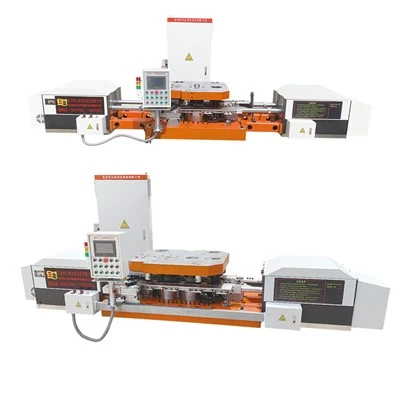
First, let’s get real: small businesses don’t have unlimited space, a dedicated heavy machinery operator, or a stack of cash to blow on a $20k machine that sits unused half the week. We’re talking 1-5 person shops, maybe a side hustle that’s blowing up, or a small fabrication outfit that does 10-50 round bar cuts a day, not 500. So any machine we’re vetting has to check three non-negotiable boxes: it’s affordable (sub-$5k, ideally), easy to use for someone who’s not a mechanical engineer, and doesn’t waste tons of bar stock (because that’s your profit, dude).
Wait, let’s skip the “industrial cold saws” first. Yeah, they cut perfect straight cuts, but at $8k+, they’re overkill. I’ve had a customer last year—small custom railings shop, 2 guys—drop $7k on a cold saw because a salesman told him it was the “best for small businesses.” A month later, he hit me up asking to trade it in for a smaller model. Why? It was too heavy to move (they do jobs on-site sometimes, remember?), it required constant blade sharpening, and the speed was so slow he could’ve cut twice as many bars with a cheaper, faster option. Dude wasted $6k for no reason. Don’t be that guy.
Now, the top contender here for small biz: the manual semi-automatic circular saw (yes, the kind you bolt to a workbench, not the handheld ones you find at Home Depot). Wait, don’t write that off yet. Let’s break down why this is way better than handheld saws or cold saws for your size. Handheld circular saws? They’re cheap, but cutting round bars means they’ll roll when you line up the cut, leading to lopsided edges, wasted stock, and even safety issues if it kicks back. I’ve seen a customer cut 12ft of 1in steel bar with a handheld, only to have it roll mid-cut, bend the bar, and send a chunk of metal flying—cost him a new bar and a minor scrape. The semi-auto bench saw has a vise that clamps the bar tight, so it doesn’t move, and the blade is mounted at 90 degrees, so cuts are straight every single time.
But wait, not all semi-auto circular saws are created equal for small businesses. The ones to skip? The cheap $1k ones off Amazon that have flimsy vises and blades that dull after 10 cuts. I get it, you’re budget-conscious, but cutting steel is hard on equipment. The sweet spot is a machine that costs between $2,500 and $4,000, has a cast iron base (so it doesn’t shake when you cut thick bars), a heavy-duty carbide blade (not the cheap steel ones), and a vise that adjusts for round bars up to 2in diameter—most small businesses never need bars thicker than that anyway.
Let’s talk about why this hits every small biz pain point. First, space: it’s only about 3ft x 2ft, so it fits on a standard workbench or even a dedicated small corner of your shop. No need to clear out a 10ft by 10ft space for it. Second, labor: you don’t need a degree to run it. You just slide the bar into the vise, tighten the handle until it’s secure, pull the lever to lower the blade, and it cuts through the bar in 10-15 seconds for 1in steel. That’s fast—you can cut 20 bars in 5 minutes, no waiting around. Third, cost per cut: the carbide blade lasts 200-300 cuts, so each cut costs you like $0.02 in blade wear, way less than a handheld saw’s blades that cost $10 each and dull after 10 cuts.
Wait, what if you’re doing more than 50 cuts a day? Or you occasionally need to cut thicker bars, like 3in for structural work? Then the hydraulic semi-automatic saw is the one to go for, but only if you can stretch the budget to $4,500-$5,500. It’s a step up from the manual one: the vise clamps automatically, so you don’t have to crank the handle tight every time, and the blade is powered by a slightly stronger motor, so it cuts 3in bars in 30 seconds flat. For a small biz that’s growing—say, you just landed a contract with a local construction company that needs 100 bar cuts a week—this is a good investment because it saves you the backache of cranking a manual vise all day. But if you’re still doing under 50 cuts a day, stick with the manual one.
Now, let’s address the elephant in the room: plasma cutters. Wait, some people swear by plasma cutters for round bars, but for small businesses? No. Plasma cutters are great for sheet metal, but cutting round bars with them leaves a rough edge that needs grinding, which adds time. Also, a plasma cutter that can cut round bars costs $3k+, and you have to deal with gas tanks, consumables, and a lot more setup. Why add 10 minutes of grinding per cut when the circular saw gives you a clean edge straight out of the machine? I’ve had a customer who tried plasma for bar cuts end up going back to the circular saw because he was losing 2 hours a day just grinding edges.
Another thing to consider: safety. Small businesses often skip safety gear, but cutting metal is no joke. The semi-automatic bench saw has a blade guard that covers the blade when it’s not in use, and the vise keeps the bar from flying out. The manual ones are even safer because you’re in full control of the blade—no automatic feed that can kick back if the bar isn’t clamped right. Handheld saws are way more dangerous because you’re holding the blade, so one slip and you’re injured.
Wait, let’s talk about real-world examples. I had a customer who runs a small furniture shop in Austin, TX, that makes custom metal tables and chairs. He started with a $1,200 handheld saw, wasting 15% of his round bar stock because of bad cuts. After he switched to a $2,800 manual semi-automatic saw, his waste dropped to 2%, which meant he was making an extra $800 a month in profit (because he wasn’t throwing away half a bar a week). Another customer, a small construction company in Chicago, needed more cuts, so he upgraded to a $4,800 hydraulic saw—his cut time went from 20 seconds to 10 seconds per bar, and he was able to take on a second job because his team wasn’t waiting around for cuts to be done.
Now, what about maintenance? Small businesses don’t have a maintenance team, so the machine has to be low-fuss. The manual and semi-automatic circular saws I recommend have parts that are easy to replace—you don’t need a mechanic to swap a blade or tighten a vise. The carbide blades are available at any metal supply store, so no waiting for special orders. Cold saws, on the other hand, have gears and motors that need regular servicing, which costs time and money you don’t have.
Wait, let’s clear up a myth: more expensive isn’t better for small businesses. I’ve seen guys drop $10k on a machine that’s designed for a 10-person industrial shop, and it ends up sitting in the corner because it’s too big, too slow, or too hard to use. The best machine for you is the one that matches your current workload and space, not the one the sales rep pushes because he gets a bigger commission.
Now, let’s wrap this up with a quick breakdown to make it easy:
- If you do <50 cuts a day, work with <2in round bars, have limited space: go manual semi-automatic, $2.5k-$3.5k.
- If you do 50-150 cuts a day, work with up to 3in bars, can stretch budget a bit: go hydraulic semi-automatic, $4.5k-$5.5k.
- Skip: handheld saws (waste, safety), industrial cold saws (too expensive, overkill), plasma cutters for bars (extra work, rough edges).

At the end of the day, the best round bar cutting machine for your small business isn’t the fanciest one—it’s the one that makes your job faster, saves you money on wasted material, and doesn’t take over your shop. If you’re still not sure which one fits your needs, feel free to reach out to us to chat through your current workflow and what you’re working on next—no pressure, just helping small businesses avoid the mistakes I see every day.
Nut Bolt Former References:
- Metal Fabrication Small Business Equipment Guide, National Small Business Association, 2022.
- Round Bar Cutting Efficiency Report, Metalworking Industry Insights, 2023.
- Occupational Safety for Metal Cutting Machinery, OSHA Small Business Advisory, 2021.
- Carbide Blade Performance for Steel Cutting Machines, Manufacturing Technology Association, 2022.
- Small Shop Machinery Space Requirements, Fabrication Shop Journal, 2023.
Quanzhou Sanye Intelligent Technology Co., Ltd.
As one of the most professional round bar cutting machine manufacturers and suppliers in China, we have world-leading production equipment and strong manufacturing capabilities. Please rest assured to buy customized round bar cutting machine made in China here from our factory. Welcome to contact us for quotation.
Address: Anhai Town, Jinjiang City, Fujian Province, China
E-mail: jack_tmm@163.com
WebSite: https://www.qzsymanipulator.com/
