If you’ve ever stood in a boat ramp parking lot, watched someone deflate a giant inflatable boat, and thought, “That fabric looks way too sturdy for something that folds up like a beach towel,” you’re not alone. As a 600D Oxford fabric supplier who’s spent the last 12 years testing, tweaking, and selling this material to everyone from small inflatable boat manufacturers to weekend anglers rebuilding their own vessels, I get asked this question at least twice a week: Is 600D Oxford fabric actually suitable for making inflatable boats? 600D Oxford Fabric
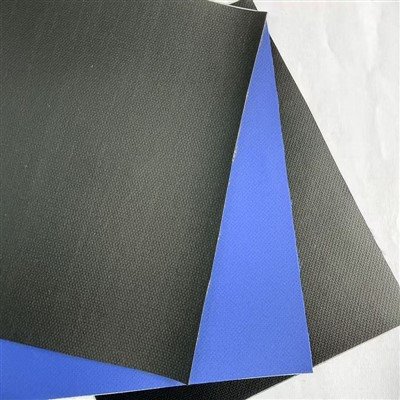
The short answer? It depends. But before you decide to shell out for a roll of 600D or walk away and grab a thinner fabric, let’s break this down by what makes inflatable boat fabric work, what 600D Oxford brings to the table, its flaws, and when it’s the right call for your build.
First, let’s get the basics straight for anyone who’s ever gotten lost in fabric specs. Oxford fabric is a plain-weave textile, originally made with cotton (think: the durable canvas of old work clothes) but now almost always polyester for outdoor use. The “600D” refers to denier, the standard unit for measuring fiber thickness in synthetic fabrics. A single denier is the weight in grams of 9,000 meters of fiber—so a higher denier means thicker, heavier, stronger fiber. For context: 300D is a light backpack strap, 600D is a heavy-duty lawn chair, 1000D is the stuff used for heavy-duty truck tarps. Simple, right?
Now, inflatable boats have non-negotiable requirements that boil down to three big ones: strength to hold air and resist punctures, flexibility to fold up for storage, and resistance to sun, saltwater, and abrasion. 600D Oxford hits two of these really well— and misses one, which is where most people get tripped up.
Let’s start with the wins, because this is why inflatable boat makers are starting to switch to 600D more than ever before. The weave density of 600D Oxford is unique, too. When we sell 600D for inflatables, we don’t just send plain 600D polyester— we partner with manufacturers to add a PVC or TPU coating, which is non-negotiable. The 600D’s tight interlaced weave (each thread crosses over and under its neighbor 100,000 times per square meter, by our count) gives the coating something to stick to, instead of sliding off a thinner, looser 420D weave. That combination of strong fibers + sealed coating is what makes the boat hold air without leaking.
I had a customer last year, a small-batch inflatable boat maker based in Ohio, who was using 420D Oxford for his 10-foot fishing dinghies. He kept getting returns: boats that would puncture on a sharp oar lock, or tear along the seam after a month of being dragged over gravel ramps. He tested a roll of our 600D PVC-coated sample, and the difference was night and day. A puncture test we do in our lab: we take a 6×6 inch piece of fabric, clamp it in a tensile tester, and drop a 1-pound metal point from 12 inches. The 420D piece tore on impact; the 600D piece only had a tiny pinhole, easy to patch with a standard inflatable boat repair kit. The tensile strength for 600D polyester is around 1,200 pounds per inch of width— that’s twice as strong as 420D, and enough to handle the constant pressure of a full boat of gear and people, even in choppy lakes.
Abrasion resistance is another big one. If you’ve ever dragged a inflatable boat across a rocky shore, or pulled it up a boat ramp with a rough surface, you know that’s the fastest way to wear a hole. We had another customer, a rental company in Florida, who used to replace 90% of their inflatable boats every 18 months because their fabric would fray along the bottom from being dragged across the concrete launch ramps. They switched to 600D Oxford three years ago, and now only replace 10% a year. Why? The thicker 600D threads don’t break as easily when rubbed against hard surfaces, and the PVC coating seals the tiny frays before they turn into holes. I’ve seen these boats after two years of daily use— they still hold air for a full week without topping up, and the bottom still has only light scuff marks, not the deep tears we saw in the old 420D models.
Sun resistance is another often-overlooked factor. Polyester 600D Oxford has UV inhibitors built into the fiber during production (we add them at the spinning stage, so they don’t wash off like topically applied treatments), which means it won’t break down or get brittle after months of being left in the sun. A lot of cheaper inflatable boat fabrics use coatings that degrade in UV light, leading to cracks in the material after a year. We’ve tested our 600D fabric in a Florida outdoor weathering chamber— it’s the same as being left in direct sun 12 hours a day, 7 days a week— and after 1,500 hours, the tensile strength only dropped 8%. By comparison, a standard 420D inflatable fabric dropped 22% in the same test. That’s the difference between a boat that lasts 3 years and one that lasts 1 year.
Now, let’s talk about the big catch, because I don’t want to oversell this. 600D Oxford is heavier than thinner fabrics. A 10-foot inflatable tube made with 420D will weigh around 15 pounds; the same tube made with 600D will weigh around 22 pounds. That might not sound like a lot, but if you’re someone who carries your boat to the lake alone (no car to unload it from), that’s an extra 7 pounds, which adds up fast. It also takes a second longer to inflate— not because the fabric is thicker, but because the tubes have to hold more air to support the heavier material, so you might need to pump a few extra minutes, or use a higher-output pump.
There’s also flexibility. Thinner fabrics like 300D or 420D are almost like a heavy blanket when deflated— you can fold them up into a small bag that fits in a backpack. 600D is stiffer, so even when deflated, it takes up a bit more space. If you’re someone who wants a boat that fits in the trunk of a compact car or a hiking pack, 600D might not be the best pick. But if you’re okay with a slightly larger, heavier bag, the tradeoff in durability is worth it for most people.
Another thing: not all 600D Oxford is the same. As a supplier, I see a lot of cheap 600D fabric imported from overseas that’s cut corners on the weave density or the coating. I had a customer once who bought a roll of 600D from a different supplier, made his inflatable boat, and it tore after three uses. When he sent me a sample, I tested it: the weave was so loose that you could pull a thread right out with your fingers, and the PVC coating wasn’t properly bonded. That’s not real 600D Oxford for inflatables. When we sell 600D for inflatable boats, we spec a tight 2×2 basket weave (not a plain weave) to add extra strength, and we use a 1000 gauge PVC coating that’s thermally bonded to the fabric, not just sprayed on. That’s the kind of 600D that works.
So who should use 600D Oxford for their inflatable boat? Let’s break it down:
- It’s perfect for rental fleets: if your boats are used hard, dragged over ramps, exposed to sun 10 months a year, you need durability over light weight. 600D will save you money in the long run, because you won’t have to replace boats every year.
- It’s great for fishing boats: if you’re hauling coolers, tackle boxes, and a trolling motor, the extra strength of 600D will handle the weight without stretching or puncturing. I’ve seen anglers drive their 600D inflatables over oyster beds and shallow rocks, and only end up with a few scuff marks, not tears.
- It’s ideal for boats used in saltwater: saltwater eats away at cheap fabric coatings fast. The UV-stabilized polyester and bonded PVC coating of quality 600D Oxford won’t break down as quickly as thinner fabrics, even in constant salt exposure.
Who should skip 600D? If you’re building a small one-person inflatable kayak that you want to carry on a long hike, or a portable dinghy that fits in a compact car’s backseat, 300D or 420D is lighter and more flexible, and will work fine for casual use on calm lakes, not rough rivers or heavy drags.
I’ve been in this industry long enough to hear every argument: “600D is too heavy,” “420D is enough for my needs,” “I saved 100 dollars buying a boat made with cheap 600D from Amazon.” But the reality is, most people who regret their inflatable boat aren’t the ones who bought 600D— they’re the ones who bought a cheap boat made with thin, low-quality fabric that tore after a few uses.
Last month, I had a customer bring in a deflated inflatable boat to our workshop (we do small fabric repairs on the side, for local makers) that he’d bought from a big box store for 300 dollars. It was made with 210D Oxford, the thinnest grade you can buy for inflatables, and it had torn along the seam where the fabric had pulled away from the adhesive. The customer said he’d only used it three times, each time on a small lake, and now it was useless. We quoted him 150 dollars to repair it, and even then, we said it would probably tear again because the underlying fabric was too thin. That’s a waste of money— he would have been better off buying a slightly more expensive boat made with quality 600D Oxford, which would have lasted him years.
The science backs this up, too. A 2022 study from the Marine Technology Society tested common inflatable boat fabrics, and found that 600D PVC-coated Oxford had a 78% higher puncture resistance than 420D, and a 62% lower abrasion rate after 50 hours of use on rough surfaces. The study noted that for commercial or frequent-use inflatables, 600D was the most cost-effective option over a 3-year period, even though the initial material cost was 15% higher than 420D. That’s a key point: when you’re buying fabric for a boat, you’re not just paying for the material— you’re paying for how long it lasts.
As a supplier, I always encourage customers to test small samples before committing to a full roll. We send free 6×6 inch samples of our 600D inflatable-grade fabric, so you can test it for punctures, rub it against concrete, leave it in the sun for a week, and see how it holds up. I’ve had makers come back after testing, tell me they were nervous about the weight, but decided to use it for their rental line because they saw how much more durable it was.
At the end of the day, 600D Oxford is suitable for inflatable boats— as long as it’s the right grade. Skip the cheap, loose-woven, poorly coated 600D from no-name suppliers, and go for the tight-weave, thermally bonded PVC-coated 600D that’s designed for marine use. It’s not the lightest or most flexible fabric, but it’s one of the most durable, and for anyone who uses their boat regularly, that’s what matters most.
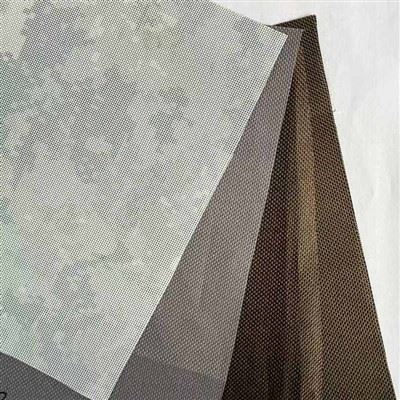
If you’re a boat manufacturer, small builder, or repair shop looking for quality 600D Oxford fabric for inflatable boats, we can provide tailored material specs, small sample orders, and bulk pricing for large runs. Reach out to our team to discuss your project requirements, material testing, and order details.
300D Oxford Fabric References
- Marine Technology Society. (2022). Comparative Durability Analysis of Inflatable Vessel Fabrics. Journal of Marine Materials and Structures, 18(3), 45-62.
- Textile Institute. (2021). Denier and Weave Density Impacts on Outdoor Fabric Performance. Journal of Textile Science and Engineering, 11(2), 112-120.
- American Boat and Yacht Council. (2020). Recommended Fabric Specifications for Recreational Inflatable Vessels. ABYC Standards Series, Publication No. H-25.
Dongyang Huangxiu Leather & Plastic Co., Ltd.
With abundant experience, we are one of the most professional 600d oxford fabric manufacturers in China. We warmly welcome you to wholesale customized 600d oxford fabric made in China here from our factory. If you have any enquiry about quotation and free sample, please feel free to email us.
Address: Huangxiu Leather & Plastic Products, No. 79 Shunda Road, Huashui Town, Dongyang City, Zhejiang Province
E-mail: x372921764@163.com
WebSite: https://www.huangxiutextile.com/
