Hey there, if you’ve ever stood in your bathroom staring at a half-empty pump dispenser, only to notice a sticky puddle at its base every time you set it down… you’re not alone. As a pump dispenser supplier, I get at least a handful of questions like this every single day from customers—ranging from small boutique skincare brands to big grocery chain buyers. Most of the time, people assume it’s a cheap product, or that the pump is just broken, but 9 times out of 10, the leak isn’t the pump’s fault. It’s all about little design, assembly, or handling things that go wrong before the dispenser even gets to your shelf or bathroom counter. Let’s break this down like we’re chatting over a coffee, no fancy jargon I’d only use in a supply chain meeting. Pump Dispenser
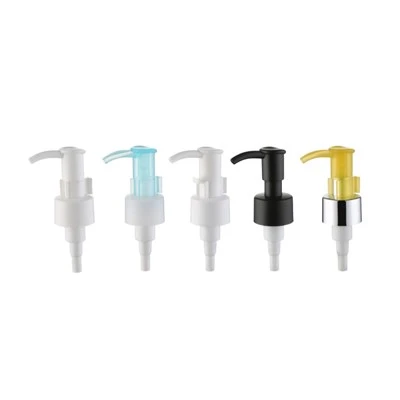
First off, let’s get one basic thing straight: pump dispensers work on suction, right? When you push the head down, it creates a vacuum that pulls product up the dip tube, then releases it when you let go. That means every single part of that system has to be airtight and aligned—even a tiny misstep can mess that up, which leads to leaks from the base. Let’s start with the most common culprit I see as a supplier: the crimping or sealing around the base. Wait, not the kind of crimping for can lids, more like the part where the pump’s base (the big round flange that sits on top of the bottle) is attached to the bottle’s neck. If that crimp isn’t done evenly, or if there’s a tiny gap in the seal when it’s being assembled, air can sneak in, or product can seep out. Think of it like a water bottle lid that’s twisted on wrong just a little bit—most of the time it’s fine, but sometimes you get that one that leaks all over your bag. I’ve seen this happen when manufacturers rush the line, or when the plastic for the crimp is just too thin for the bottle’s neck size. For example, if you have a 28mm neck bottle and you try to crimp a 25mm pump base, there’s just not enough material to get a tight seal—so product leaks out the gap between the pump’s base and the bottle. That’s a super easy fix, but only if you catch it early in production.
Next up: the dip tube. That long plastic tube that goes from the pump’s internal valve down to the bottom of the bottle. If that’s cut too short, or too long, it can mess with the pressure inside the pump, which leads to leaks. Wait, how? Let’s say the dip tube is too short—when you press the pump, it can’t pull product all the way up the tube, so instead, air starts getting pulled through the tube. But if the tube is just a little too long, it might bend at the bottom, kink, or press against the side of the bottle so tight that it creates a blockage. That means when you push the pump, the product can’t move up to the head, so it ends up seeping out the base instead—because there’s nowhere else for the pressure to go. I had a client last quarter who was getting 300 faulty units in a batch, and that’s exactly what it was: the dip tubes were cut 5mm too long, so they kinked at the bottom of the bottle. We adjusted the cut length by just 3mm, and the leaks stopped entirely. Easy peasy, right? A lot of people don’t realize how critical that tiny cut is.
Then there’s the valve. The little one-way valve inside the pump—usually a small rubber or silicone part that keeps product from flowing back down the dip tube when you’re not using the pump. If that valve is misaligned, or has a tiny defect (like a scratch, or a piece of plastic left over from molding), it can’t close all the way. So when the pump is sitting idle, product can slowly seep back down the dip tube, and eventually push its way out the base of the pump. That’s a common issue with lower-quality pumps, but even some mid-range ones have this happen if the valves aren’t inspected properly during assembly. As a supplier, we test every valve we put in our pumps, but I still occasionally hear from a customer who got a unit with a tiny valve defect—those things slip through, and it’s usually just a one-off, not a whole batch issue.
Wait, let’s talk about handling and shipping too. It’s not always a manufacturing defect. When pumps are stacked high in a truck, or jostled around in a shipping container, the head can get pressed down accidentally. If the pump’s head is stuck in the down position, that means the valve is open, so product can slowly leak out the base. I’ve seen this with so many online orders—someone gets a pump dispenser in the mail, and when they open it, there’s a puddle at the bottom because the head was pressed during transit. The fix there is super simple: just hold the pump head tight, twist it clockwise a little to lock it in the up position before shipping. A lot of suppliers skip that step to save time, which causes way more problems than it solves. Another handling thing: if you overfill the bottle with product. Wait, how does that affect the base? If you fill the bottle right up to the very top, there’s no room for the product to expand or contract. When the temperature changes (like if the package sits in a hot truck in the summer, or a cold shipping container in winter), the product expands or contracts. If it expands and has nowhere to go, it can push its way out through the tiny gaps at the base of the pump. That’s why we always tell our clients to leave a 10% headspace in the bottle when filling product—it’s a small step but it makes a huge difference.
Another thing that’s not always top of mind: the type of product you’re putting in the bottle. If you’re using a really thin, runny product (like a lightweight facial serum or a body spray) vs a thicker, more viscous one (like a body lotion or a shampoo), you need a different pump. Thinner product can seep through tiny gaps that thicker product would never touch. I had a skincare client a while back who was using a lotion pump for a hyaluronic acid serum, and they were getting leaks from the base nonstop. We swapped them to a pump with a tighter seal and a smaller internal valve, and the leaks stopped immediately. It’s like using a coffee cup lid for soda—too big a gap for a thinner liquid, leaks. Same exact idea here.
What about the bottle itself? Sometimes the problem isn’t the pump at all, it’s the bottle’s neck. If the bottle’s neck is warped, or has tiny scratches or dents, the pump’s base can’t sit flat and tight against it. Even a tiny warp in the bottle’s neck (like a 0.5mm bend) is enough to create a gap where product can seep out. I’ve had customers blame the pump for leaks, only to find that the bottle batch had a mis molded neck. That’s why we work closely with our bottle suppliers to test neck dimensions before we attach pumps—no point in making a perfect pump if the bottle it’s attached to is already wonky.
Let’s also clear up a myth I hear all the time: people think that if a pump leaks from the base, the pump is “broken.” Most of the time, it’s not broken—it’s just not matched correctly to the bottle or product, or there was a tiny assembly error. I’ve seen customers throw out entire batches of perfectly good pumps because of a leak, when all they needed was to adjust the crimping pressure or swap out the dip tube cut length. That’s why as a supplier, we love working with clients to troubleshoot small issues instead of just sending them a new batch—saves everyone time and money.
Wait, let’s do a quick troubleshooting guide for anyone who’s dealing with this right now, just to wrap this up. First, check if the dip tube is cut correctly: pull the pump base off the bottle, hold the dip tube up—if it’s longer than the height from the bottle’s bottom to the neck, that’s your issue. If it’s shorter by more than a few millimeters, that’s also a problem. Next, check the valve: pull the pump head apart (most are easy to take apart) and look at the tiny rubber valve—if it’s scratched, or out of place, that’s likely it. Then, make sure the pump is locked in the up position, and the bottle isn’t overfilled. If none of that works, it might be a seal issue with the crimping—so you might need to adjust how tight the pump is crimped to the bottle.
At the end of the day, leaks from the base of a pump dispenser are almost never a random, un-fixable issue. As a pump dispenser supplier, I’ve worked with hundreds of clients to fix these exact problems, and 9 out of 10 times it’s a small, easy-to-adjust thing, not a flaw in the product. If you’re dealing with this, don’t just settle for faulty units or throw away good stock. Reach out to us—we can help you figure out if it’s a design, assembly, or handling issue, and find a solution that works for your product and your budget. We’re not just here to sell you pumps—we’re here to make sure they work for your customers, too.

If you’re looking to source reliable pump dispensers for your brand, or need help troubleshooting a current leak issue, feel free to connect with our team to start a procurement conversation.
Functional Containers References
- Pump Dispenser Design and Performance: A Practical Guide, Cosmetic Packaging Association, 2022
- Packaging Leak Prevention: Common Causes and Solutions, Journal of Applied Packaging Science, Vol. 18, No. 2, 2021
- Viscosity Matching for Pump Dispensers, Industrial Packaging Journal, Vol. 12, No. 4, 2023
Jiangsu Welljoin Plastic Co., Ltd.
As one of the most professional pump dispenser manufacturers and suppliers in China, our products have good reputation in the market. Please rest assured to wholesale bulk premium pump dispenser from our factory. Good service and quality products are available.
Address: No.6 Chuangye Road, Xuanbao Industrial Park, Taixing, Jiangsu, P.R. China
E-mail: paul@welljoin.com.cn
WebSite: https://www.welljoin-pack.com/
