Hey there! If you’ve ever been shopping for 2 inch double block and bleed plug valves, you know how frustrating it can be when all the results give you vague price ranges or generic lines that don’t take your actual needs into account. As someone who’s been in the valve game for over a decade—running a small, reliable valve supply outfit that specializes exclusively in double block and bleed (DB&B) plugs, I’m here to break this down like I would with a fellow plant engineer or maintenance guy leaning over a workbench at 7 a.m. No stuffy jargon, no fake numbers, just real talk on what that 2 inch DB&B plug valve might actually cost you. Double Block and Bleed Plug Valve
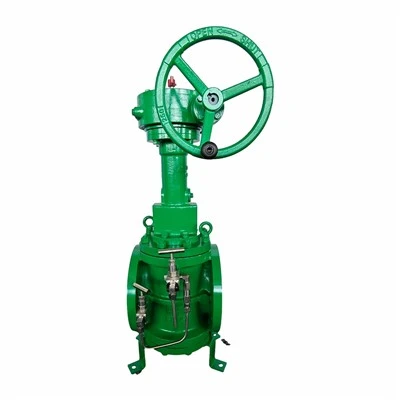
First off, let’s get one thing straight: there’s no single “price tag” for a 2 inch double block and bleed plug valve. This isn’t a toaster you grab at the grocery store. These valves work in critical spots—think oil and gas pipelines, chemical processing plants, water treatment facilities, even power plants where you can’t afford leaks or failures. So their price depends on way more than just the “2 inch” size number. Let’s walk through the main factors that make a difference, because that’s what most suppliers won’t tell you up front.
First, the material of the valve body. This is a huge one, and it’s non-negotiable for most users. If you’re working with fresh water, mild chemicals, or non-corrosive gases, you can get away with a carbon steel body—super common, affordable, tough enough for general use. A 2 inch carbon steel DB&B plug valve will run you roughly between $450 and $800, depending on the brand and any extra features you add. But if you’re handling something harsher—like sulfur, saltwater, strong acids, or high-temperature chemicals—you can’t use carbon steel. You’ll need stainless steel (316 is the go-to for corrosion resistance, way better than 304 for most heavy-duty jobs) or even alloy materials like Hastelloy or bronze for specific food-grade or marine applications. A 2 inch 316 stainless steel DB&B plug valve jumps to $800 to $1,500, and a Hastelloy one will set you back $2,000 to $3,500—no joke, that material ain’t cheap, and you don’t want to skimp here if you’re dealing with stuff that’ll eat through a regular valve in six months.
Next, trim and sealing components. The plug and the seat (the parts that actually seal off flow) are make-or-break for a DB&B valve, since double block and bleed means you’ve got two seals and a vent in between—so if one seal leaks, the bleed catches it. Standard seats are usually PTFE (Teflon) which works great for most temps up to 500°F or so. But if you’re working at higher temperatures, like 600°F to 800°F (common in some refining or power processes), you need a more robust seat material, like reinforced PEEK or metal seats. Metal seats are even pricier, but they’re way more durable for extreme heat or abrasive fluids. The plug itself—some are machined from solid bar stock, others are cast. Solid bar stock is smoother, seals better, and lasts longer, so that’ll add a bit to the price, but it’s worth it. A DB&B with PTFE seats and a solid plug is a bit more than one with standard seats, and metal seats can add another $300 to $500 on top of the base price.
Then there’s pressure rating. DB&B plug valves come in different pressure classes—150, 300, 600, 900, even higher for super high-pressure lines. A Class 150 valve (lower pressure, common for general piping) is way cheaper than a Class 900 or Class 1500, which are built to handle way more force. A 2 inch Class 150 carbon steel DB&B might be $450, but a Class 600 in the same material is $700, and a Class 900 is $950. The thicker the valve body walls, the higher the pressure rating, so that extra steel (or alloy) and machining time adds up fast. I’ve seen guys try to cut corners here and use a Class 150 valve on a Class 300 line—never works, blows out seals, leaks everywhere, and that’s way more expensive in downtime than the extra $200 for the right pressure-rated valve.
Actuation is another big factor. Most small 2 inch DB&B valves for manual operation are just a handwheel on top, which is standard and doesn’t add much cost. But if you need to operate it remotely—like on a line where you can’t safely get to the valve to turn the handwheel, or if you have automated systems—you’ll need an electric actuator, pneumatic actuator, or even a hydraulic one. A basic pneumatic actuator for a 2 inch valve runs around $300 to $500, an electric one is $500 to $1,000, and those add right onto the valve price. So a manual 2 inch stainless steel Class 300 DB&B is maybe $1,000, add an electric actuator and you’re at $1,500 to $2,000. That’s a jump, but if your plant runs 24/7 without crews hovering around every valve, automation is non-negotiable for efficiency and safety.
Wait, also—certifications. A lot of industries need specific certifications for valves, and that adds cost too. If you’re in the oil and gas sector, you might need API certification (API 6D is the main standard for plug valves). For food and beverage or pharmaceutical, you need 3-A certification or FDA approval for contact with food products. For water treatment, AWWA certifications are required. Getting a valve certified means extra testing, documentation, and quality control checks, so that can add $100 to $300 to the base price. Skip the certification and you risk failing inspections, getting fined, or even having your whole process shut down. Been there, seen that—guy saved $200 on a non-API valve, got audited, lost a $10k contract over it. Not worth it.
Now, let’s talk about real-world numbers, not just ranges, because I know you want to see what you’d actually pay. If you’re a small shop or a maintenance guy replacing a standard 2 inch DB&B for fresh water, Class 150, carbon steel, manual, PTFE seats—you’re looking at around $500 to $600. That’s the entry-level, workhorse valve that’ll last 5 to 10 years if you take care of it. For a mid-grade 2 inch valve, say 316 stainless steel, Class 300, PTFE seats, manual, for mild chemicals or saltwater—$900 to $1,200. That’s what most industrial clients go for, because it’s tough enough, not overkill, and holds up well without breaking the bank. Then for the heavy stuff—2 inch alloy body (Hastelloy or Inconel), Class 900, metal seats, actuator, API certified, for high-temperature corrosive chemicals—you’re talking $2,500 to $4,000. That’s the premium valve, built for critical lines where downtime costs $10k an hour, so spending extra on a reliable valve is a no-brainer.
Wait, but hold on—there are other hidden costs too. Shipping! Most big valves are heavy, so shipping a 2 inch DB&B can be $50 to $150, depending on where you are. Also, lead time. If you need a standard valve in stock, you can get it in a day or two, price is set. If you need a custom one—like a specific material, non-standard pressure rating, or special coating (like epoxy for extra corrosion resistance), lead time goes up to 2 to 4 weeks, and sometimes you pay a rush fee of 10% to 20% if you need it in a hurry. I’ve had customers call me up at 3 p.m. on Friday saying their valve broke on a critical line and they need it by Monday—we can rush it, but that adds $100 to $200, so just a heads up.
And let’s not forget about quality vs. cheap knockoffs. I see guys on Alibaba or Amazon selling 2 inch DB&B plug valves for $200, and I want to yell. Those are usually made from thin cast steel that’ll rust in a year, seals that blow out under pressure, no certifications, no support. Yeah, you save $300 up front, but when that valve leaks and shuts down your plant for 3 days, you’re out way more. We’ve been supplying valves for over 12 years, and our customers tell us they go with our products because we don’t cut corners—every valve gets tested before it leaves our warehouse, we give you a 1-year warranty, and if you have a problem, we answer the phone at 7 a.m., not send you an email auto-reply.
So what’s the takeaway here? The price of a 2 inch double block and bleed plug valve isn’t a random number—it’s based on what you actually need the valve to do. If you’re just replacing a standard water line valve, $500 is about right. If you’re working in a harsh chemical plant, expect to pay more. The key is to know your specs: body material, pressure rating, seat material, actuation, certifications, and lead time. Don’t just go for the cheapest one, and don’t overspend on features you don’t need.
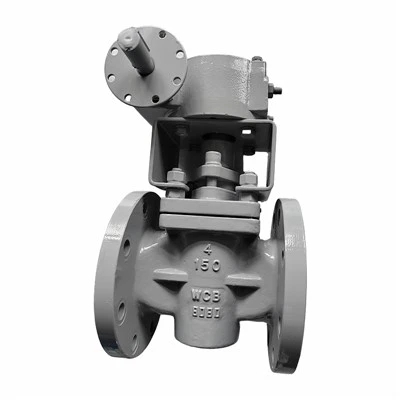
At the end of the day, we’re here to help you figure out exactly what you need without guessing. If you have questions about sizing, materials, or pricing for your specific application, feel free to reach out to us to talk through your project. No sales pitch, no pushy lines, just honest answers and a price quote tailored to your needs. Whether you’re a maintenance manager ordering one replacement valve or a plant engineer needing 50 for a new build, we can get you a reliable, correctly priced 2 inch DB&B plug valve that works for your budget and your process. Let’s connect and make this easy for you.
Orbit / Lift Type DBB Plug Valves References:
- API Specification 6D, Pipeline Valves
- AWWA C504, Butterfly Valves for Water and Other Waste Services (adapted for plug valve applications)
- ASME B16.34, Valves—Flanged, Threaded, and Welding End
Zhejiang Demelong Fluid Technology Co., Ltd.
As one of the most reliable double block and bleed plug valve manufacturers and suppliers in China, we’re featured by quality products and good service. Please rest assured to buy bulk durable double block and bleed plug valve from our factory. If you have any enquiry about customized service, please feel free to email us.
Address: No.7936, Sunshine Avenue, Oubei Street, Yongjia County, Wenzhou City
E-mail: dml@zjnsvalve.com
WebSite: https://www.cn-dmlv.com/
