Hey everyone, thanks for tuning in to my walkie talkie blog—today we’re breaking down one of the most common questions I get as a 10 watt walkie talkie supplier: What’s the actual range of a 10 watt walkie talkie? I know, I know, when someone’s got a 10W radio, it’s easy to assume it’ll blast for miles, but real-world use? That’s where the rubber meets the road, and trust me, it’s way more complicated than the spec sheet makes it sound. Let’s dive in, no confusing jargon, just straight talk from someone who’s been selling these things for years. 10 Watt Walkie Talkie
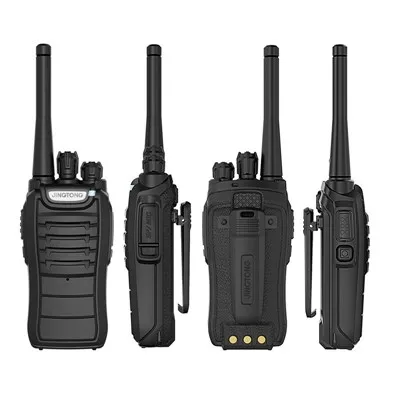
First off, let’s get one thing straight: wattage isn’t the only thing that determines range. I’ve had customers come in all hyped up because they saw a 10W radio and thought they’d be talking 20 miles apart, only to be disappointed when they can barely reach their buddy down the street. That’s not the radio’s fault—it’s all about the environment, the antenna, and a bunch of other factors most people don’t think about. Let’s start with the basics: what’s a watt, anyway? For radio folks, a watt is a measure of power output, right? 10 watts is 10 times more powerful than a 1W walkie talkie, which is why it’s such a popular sweet spot for everything from construction crews to camp groups. But here’s the catch: that 10W is the power the radio puts out at the antenna connector, not the power that actually gets transmitted into the air.
Now, let’s talk “line-of-sight” range first, because that’s the number you’ll see on most spec sheets. Line-of-sight (LOS) is basically how far you can see the other radio—if there’s nothing blocking your view, like hills, buildings, or trees. For a 10W UHF walkie talkie (UHF is the frequency most people use for short-to-mid range stuff, like construction or indoor/outdoor work), the LOS range is roughly 5-8 miles. If you’re on VHF, which is better for open areas, that number jumps a bit—maybe 8-12 miles. Wait, that’s a big gap, right? Why the difference? UHF frequencies are shorter, so they bounce off less and work better around obstacles like concrete or metal. VHF travels farther in open spaces because the waves are longer and can bend around things a bit more. But that’s just LOS. The real range? That varies so much, and I’m going to break down all the factors that change it, because that’s what my customers actually need to know.
Let’s start with the big one: obstructions. I can’t tell you how many times a customer has said, “I’m buying 10W radios to use at my warehouse, it’s 100k sq ft, so I need 10 miles!” No, buddy. A big warehouse with steel beams, concrete walls, and metal racks is a nightmare for radio signals. Those obstacles absorb or block UHF and VHF waves like crazy. In an urban area with tons of skyscrapers and dense trees, a 10W radio might only reach 1-2 miles. If you’re in a rural area, no hills, just open fields, that same radio could hit 5-7 miles easy. I had a customer last year who used our 10W UHF radios for a farming operation—they had two trucks, 6 miles apart across flat cornfields, and they worked perfectly. But another guy used them for a apartment building renovation in downtown Chicago, and he was frustrated because he could barely reach the next floor. That’s just how it goes. Oh, and don’t forget about weather! Heavy rain, snow, even fog can attenuate (that’s the fancy word for “absorb”) radio signals, especially UHF. If you’re working in a storm, your range might drop by a mile or two, no big deal but something to keep in mind.
Next up: antennas. This is the biggest “upgrade” you can make to boost your range, way more than just cranking up the wattage. The stock antenna that comes with most 10W walkie talkies is fine, but it’s not optimized for maximum range. A good gain antenna can make a huge difference. For example, if you’re using your radio in a truck, a 3dB gain whip antenna might give you an extra 2-3 miles of range, because it focuses the signal more in the direction you need it. If you’re setting up a base station, a longer, higher-gain antenna mounted on a roof or a pole can add even more. Wait, and don’t forget: the antenna on the other radio matters too. If one guy has a cheap stock antenna and the other has a high-gain one, the range will be limited by the weaker antenna. That’s a common mistake people make—they buy a 10W radio with a good antenna, but pair it with a cheap one for their team members, and wonder why the range sucks.
Then there’s power source and radio setup. A lot of people don’t realize that a 10W radio won’t put out full 10W if the battery is dying. If your battery is at 50% or lower, the power output drops, which kills range. I always tell customers to keep their batteries fully charged, especially if they’re heading out for a long day. Also, some radios have power settings—you don’t always have to run at 10W! If you’re just using the radio in the same small worksite, running at 2W will save battery, and you’ll still have enough range. But if you’re going far, crank that 10W on. Another thing: terrain. Hills are a huge range killer. If you’re on one side of a big hill, and the other radio is on the other side, that hill is blocking the signal completely. Even a small hill, like 100 feet tall, can drop your range from 5 miles to less than a mile. That’s why when you’re working in hilly areas, you might need to set up a repeater— a device that picks up your signal and retransmits it, doubling your range. And guess what? A lot of our customers use our 10W radios to set up repeaters too, because they’re reliable and have enough power to run a repeater station.
Wait, let’s also talk about real-world use cases, because that’s what matters most. I’ve seen so many people get stuck on the spec sheet number, so let’s go through common scenarios and what range you can actually expect from a 10W walkie talkie, based on my years of selling these:
-
Urban environments (cities, dense neighborhoods, downtown construction): 1-3 miles max. Between buildings, people, cars, and concrete, the signal bounces and gets absorbed left and right. I had a construction crew working on a 10-story building in Miami, they used our 10W UHF radios on each floor, and they could reach each other across the building just fine, but when they tried to talk to the truck parked two blocks away, that was pushing it. That’s totally normal.
-
Suburban or small-town areas (single-family homes, low-density development): 2-5 miles. Fewer tall buildings, so signals have more room to travel. A friend of mine uses these for his landscaping business, moving between yards in a small suburb, and he can reach his crew across 4 miles of houses easily.
-
Rural open areas (farms, fields, mountains with low elevation, no big trees): 5-12 miles. If you’re in the middle of a cornfield with nothing around, line of sight is long, and the signal travels far. That farming customer I mentioned earlier, he was 6 miles apart and had zero issues. I even had a hiker use our 10W radios on a backcountry trip in the Rockies, and they could reach 8 miles apart across open peaks.
-
Indoor or enclosed spaces (warehouses, factories, office buildings): 0.5-2 miles. Steel beams, concrete walls, metal racks—these things kill signals. A lot of our industrial customers use repeaters inside big warehouses to boost range, which pairs perfectly with our 10W radios because the repeaters need a reliable power source.
Now, let’s bust some common myths, because I hear these all the time. First myth: “Higher wattage always means more range.” Nope, not if you’re surrounded by obstacles. A 5W VHF radio in an open field will have longer range than a 10W UHF radio in a concrete parking garage. Frequency matters way more than raw power in that case. Second myth: “10 watts equals exactly 10 times the range of a 1W radio.” That’s not how radio waves work. Range doesn’t scale linearly with wattage—you get diminishing returns. A 1W radio might have 1-2 mile range, a 5W might have 3-5, a 10W might have 5-10, it’s not doubling every time you add a watt. Third myth: “No interference means perfect range.” Interference from other radios, cell towers, even power lines can mess with your signal, cutting range even if there’s no physical obstacles. Most of our 10W radios have clear frequency channels, which helps with that, but it’s still something to watch for.
As a supplier, I always work with my customers to figure out exactly what range they need, so they don’t end up with the wrong radio. For example, if someone is a small landscaping team working 3 miles apart, I might recommend a 10W UHF radio with a gain antenna, which will work perfectly. If someone is a farm needing 10 miles, I’ll mention VHF with a roof-mounted antenna, maybe a repeater if they have rolling hills. I also sell accessories that boost range—gain antennas, repeaters, extended batteries—because I want my customers to get the most out of their radios, not just rely on the spec sheet number. A lot of competitors will just tell you “10 watts equals 10 miles,” but that’s only in perfect, ideal conditions that almost no one actually uses their radios in. I’d rather be honest with people than have them come back frustrated because their radio didn’t perform like they thought it would.
Wait, another thing to mention: FRS vs GMRS? Oh right, a lot of people mix these up, and that changes range too. FRS radios are usually under 2 watts, but GMRS allows up to 50 watts, so our 10W radios are GMRS-compliant, which means they’re legal to use in the US (you just need a GMRS license, which is super easy to get, like $35 for 10 years). That’s a big one for customers—if they buy a cheap FRS radio, it’s way less powerful, but our 10W GMRS radios are fully legal and have the range we’ve been talking about. I always make sure to explain that difference to people because it’s a game-changer for range.
Let’s also talk about how battery life ties into range, since that’s a real pain point for users. A fully charged 10W radio on the low power setting will last 10-12 hours, but on 10W, it’s more like 6-8 hours. If you’re working a full shift, that’s important—no one wants their radio dying mid-job because they cranked it to full power. That’s why we sell high-capacity extended batteries that add another 4-6 hours, so you don’t have to choose between range and battery life.
I get it, when you’re investing in walkie talkies, you want to know exactly what you’re getting. No one wants to overspend on a radio that can’t reach their crew, or underspend and have to replace them in a year. As someone who’s been in this game for years, I’ve seen all the mistakes. The biggest takeaway is: a 10W walkie talkie’s range isn’t a fixed number—it’s a range, like 1-12 miles, depending on where you use it. The spec sheet gives you the ideal line-of-sight number, but real life has obstacles, weather, antennas, and other factors that change everything.
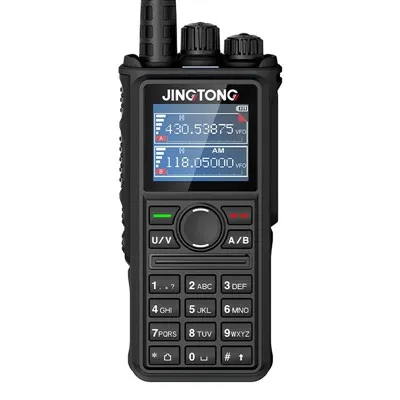
If you’re shopping for 10 watt walkie talkies and want to figure out exactly what range you’ll need for your specific job, or if you have questions about accessories like gain antennas or repeaters, feel free to reach out to chat. I’m happy to help you pick the right setup for your needs, no pressure, no sales pitch—just straight answers. Whether you’re running a construction crew, managing a farm, planning a camping trip, or just need radios for your small business, I can point you in the right direction. No guesswork, no confusing terms, just honest advice from someone who sells these things every day and knows what works.
4g and Analog Radio References:
- Federal Communications Commission (FCC). (n.d.). GMRS Frequency Allocations and Power Limits. Retrieved from official FCC guidelines for General Mobile Radio Service
- Radio Reference. (n.d.). UHF vs VHF Radio Propagation Characteristics. Retrieved from radio propagation resources for two-way radio users
- Two-Way Radio Academy. (2022). Factors Affecting Two-Way Radio Range in Real-World Environments. Retrieved from educational materials for commercial radio operators
- Amateur Radio Relay League (ARRL). (n.d.). Line-of-Sight Range Calculations for VHF/UHF Frequencies. Retrieved from ham radio educational resources on radio distance and attenuation
Jingtong (Quanzhou) Electronics Co., Ltd.
We are one of the most professional 10 watt walkie talkie manufacturers and suppliers in China, specialized in providing high quality customized service. We warmly welcome you to buy durable 10 watt walkie talkie made in China here from our factory. For price consultation, contact us.
Address: No.288, Si Huang Industry Zone, Xia Mei Town, Nan An, Quanzhou, Fujian province, China 362302
E-mail: jtdjj@jtdjj.com
WebSite: https://www.jteradio.com/
