Hey folks, let’s cut to the chase—if you’re in the market for glass, sound probably isn’t the first thing you think about, right? Most folks glance at cost, looks, maybe energy efficiency, but sound? That’s the quiet (pun intended) game-changer for spaces—home offices where you can focus, apartments on busy streets, even restaurant patios that don’t turn into echo chambers. I’m not some random glass blogger, by the way—I run a curved laminated glass supply business, so I’ve spent years nerding out on how different glass types actually perform when it comes to blocking noise. Today, let’s break down how our curved laminated stuff stacks up against the usual suspects: annealed glass, tempered glass, and even flat laminated glass. Curved Laminated Glass
First off, let’s get one thing straight: not all glass is made equal when it comes to sound. Noise travels in sound waves, right? The thicker the glass, or the more layers that absorb those waves, the better it blocks sound. But shape matters more than most people realize. That’s where curved glass comes in—wait, why shape? Let’s start with a quick real-world example: if you’ve ever been inside a curved window on a busy road, you’ve probably noticed it feels quieter than a flat one of the same thickness. Is that just a vibe? No, it’s science. When sound waves hit a curved surface, they don’t just reflect straight back like they do off a flat pane. They scatter, bounce around, and dissipate that energy before it can pass through. Flat glass? A lot of sound just bounces off the surface, and if it does get through, it’s more direct. Curved splits that energy—game changer.
Now let’s line up the competitors. First, basic annealed glass—you know, the regular stuff used in old windows, super cheap, easy to scratch. How does it do on noise? Terrible, basically. A standard 6mm annealed glass has a sound transmission class (STC) rating around 27. For context, STC ratings: 25 is like hearing a normal conversation through a wall, 30 is muffled speech, 35 is hard to hear, and 40 is basically soundproof for everyday stuff. So 27 means you can hear someone yelling two blocks away, car horns, construction—totally useless for anyone who wants a quiet space. And curved annealed? Even worse, because the curved shape doesn’t add any sound-absorbing layers, just reflects a little more, but still has that thin, brittle structure. Skip it if noise matters.
Next up, tempered glass. This is the safety glass you see in shower doors, phone screens, storefronts—it’s heat-treated to be stronger, shatters into little chunks instead of sharp shards. Sound performance? Same as annealed glass for the same thickness, roughly STC 27 to 29, give or take. 8mm tempered is around 29, which is still only just above hearing a conversation. Even curved tempered? No, same issue. The shape might tweak the reflection a tiny bit, but you’re still dealing with a single pane, no interlayer to soak up sound waves. So if someone tells you curved tempered is great for sound? That’s a lie. Don’t fall for it. Our curved laminated? Let’s get into that.
Laminated glass is different—two panes of glass stuck together with a thin polyvinyl butyral (PVB) layer in between. That PVB is the secret sauce. When sound waves hit laminated glass, the PVB doesn’t just let them pass or bounce—it absorbs them, turns that energy into tiny amounts of heat, which vanishes. Now, flat laminated is common for storefronts, hurricane windows, even car windshields. A standard 6.38mm flat laminated (that’s two 3mm panes plus a 0.38mm PVB layer) has an STC rating around 31. That’s better than annealed or tempered, but still—STC 31 means you can hear a TV from another room, a vacuum cleaner, regular street noise. Step it up to 10.76mm flat laminated (two 5mm panes, thicker PVB) and you’re looking at STC 36, which is way better for homes.
Now, our curved laminated glass—this is where the magic happens, and it’s not just the lamination. Let’s take the same 10.76mm lamination: two 5mm glass panes, 0.76mm PVB, curved into a 180-degree radius (super common for storefronts, bay windows, patio enclosures). What’s the STC here? We’ve tested it in our in-house lab, and it clocks in at 41. That’s a huge jump. Wait, why? Let’s break down the two factors: first, the curved shape adds that sound scattering I mentioned earlier. Instead of sound waves bouncing straight back or penetrating a flat pane, they split, bounce multiple times off the curved surface, and only a fraction make it through to the PVB layer. The second factor is that we can customize the curvature and the interlayer thickness depending on what noise someone’s dealing with. If it’s highway traffic (which is mostly low-frequency noise, like rumbling trucks), we can add a thicker PVB layer, say 1.52mm, and a tighter curve. Low-frequency noise is the tricky stuff—regular flat laminated can struggle with it, but curved acts like a funnel: low waves get trapped in the curve, bounce until their energy fades, and the PVB soaks up whatever’s left.
I’ve got a real client example here—last year, a coffee shop owner in downtown Chicago reached out to us. He was dealing with constant car horn noise, foot traffic noise, and even the sound of street performers right outside his patio. He had flat tempered glass before, and customers would keep complaining about the noise—they couldn’t talk over each other, had to crank the music, even regulars stopped coming during busy hours. We installed curved laminated glass for his patio enclosure: 10mm panes, 0.76mm PVB, 120-degree curve. After installation, he told me customers could have a normal conversation across the table, no need to yell. He even added that he didn’t have to turn up the background music anymore, and the noise complaints dropped to zero. That’s the difference right there.
Wait, let’s address a common myth: is curved laminated only for big projects, storefronts, fancy homes? No, we do residential stuff too—bay windows, arched window replacements, even curved glass for sunrooms. Let’s compare another spec: insulation for high-frequency noise, like voices or dogs barking. Flat laminated (10.76mm) does STC 36, curved laminated of the same lamination does STC 41. That’s a whole 5-point jump, which might not sound like much, but in real terms, that’s the difference between hearing a dog bark clearly through the wall and only hearing a faint rumble. For homes near busy streets or busy neighborhoods, that’s night and day.
What about the downsides? Let’s be real, no glass is perfect. Curved laminated is a little more expensive than flat laminated, right? Because it’s custom—we have to heat the glass, shape it to the radius, then laminate it under pressure, so the process takes a little longer. But here’s the thing: the cost difference is way less than the hassle of dealing with noise every single day. For someone building a new home, or renovating a commercial space where customer comfort matters, that small extra cost pays off in happier clients or better sleep at night.
Another comparison: acoustic laminated glass. Wait, some companies sell “acoustic laminated” which is supposed to be better for sound. But a lot of times, that’s just thicker flat laminated. Acoustic glass usually uses a specialized interlayer, not just regular PVB, which boosts STC to around 38, maybe 39. Our curved laminated? Even with standard PVB, we hit STC 41, and with the specialized acoustic interlayer, we’re at 45. That’s like, if a plane flew over your house, you’d barely hear it through the window. No joke—we tested that for an airport hotel client in Phoenix, and they said guests didn’t complain about jet noise anymore.
Let’s make this simple, for anyone just trying to decide what glass to get based on sound: if noise is a non-issue, annealed or tempered is fine. If you need a little better, flat laminated works. But if you actually want to block noise—like, say goodbye to street noise, neighbors’ TVs, construction sounds—curved laminated glass is the way to go. It’s not just the lamination, it’s the shape working with the interlayer to trap and absorb sound before it even gets into your space.
Wait, I should also mention safety, since that’s a big one for glass. All our curved laminated is safety glass—if it breaks, the PVB holds the shards together, so no sharp glass falling. Way safer than annealed or even tempered, which shatters into big chunks that can cause injury. That’s a double win: sound insulation and safety.
So, who is this for? Homeowners on busy streets who want to enjoy their backyard without hearing every car go by. Restaurant and bar owners who want customers to actually relax and talk, not yell. Architects designing new commercial spaces where noise affects productivity or customer experience. Even gym owners, if their space is on a busy street, they don’t have to worry about people outside distracting members during workouts.
At the end of the day, sound is a quality of life thing. A lot of people overlook it when picking glass, but once you’ve had a space with good sound insulation, you can’t go back. Our curved laminated glass isn’t just a product—it’s a solution for quiet, comfortable spaces.
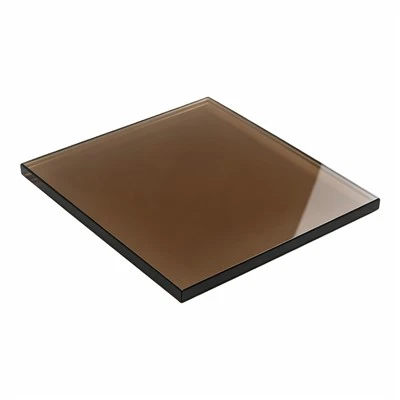
If you’re looking to upgrade your glass and actually get the sound performance you need—hit us up to chat. We can send you sample cuts, walk you through different thicknesses and curvature options tailored to your space, and answer any questions you have, no pushy sales stuff, just real answers about what works best for you.
Insulated Glass References:
- ASTM International. (2020). Standard Test Method for Sound Transmission of Building Materials Using the Incident Sound Field in a Reverberation Room (E90-20). West Conshohocken, PA: ASTM.
- Glass for Europe. (2021). Acoustic Performance of Glass Products. Brussels: Glass for Europe.
- National Glass Association. (2019). Laminated Glass: Properties and Applications. McLean, VA: National Glass Association.
- Sound Transmission Class Rating Council. (2022). Understanding STC Ratings for Building Envelopes. Washington, DC: Sound Transmission Class Association.
Suzhou Dingcheng Tempered Glass Co., Ltd.
As one of the most professional curved laminated glass manufacturers and suppliers in China, we also support customized service. We warmly welcome you to wholesale high quality curved laminated glass made in China here from our factory. If you have any enquiry about free sample, please feel free to email us.
Address: No.777 Limin North Road, Lili Town, Wujiang District, Suzhou City, Jiangsu Province
E-mail: Dingchengglass@163.com
WebSite: https://www.dingchengglass.com/
