If you’ve ever stood next to a moving truck at a stoplight and felt the whole vehicle rumble, or opened the hood of a car that’s idling rough, you’ve experienced the kind of vibration that doesn’t belong in a well-tuned machine. As someone who’s spent the last 12 years running an automotive compressor supply business, I see vibration as one of the quietest, most destructive threats to the parts we build—and the systems those parts keep cool. Most of the time, when a customer calls with a compressor failure, they’re quick to point to age, bad refrigerant, or a random manufacturing defect. Rarely do they mention the vibration that’s been shaking the compressor’s core for months, the same vibration they wrote off as “just part of driving.” Today, I want to change that. I want to break down how excessive vibration takes what should be a 10+ year reliable component and turns it into a replacement part that costs fleets, repair shops, and everyday drivers thousands in downtime—and why getting ahead of this issue is non-negotiable for anyone relying on automotive compressors. Automotive Compressor
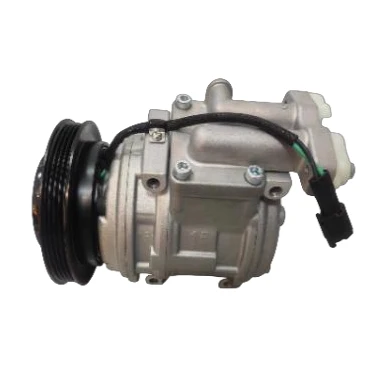
Let’s start with what normal vibration looks like for an automotive compressor. A compressor’s job is simple: it pressurizes refrigerant, turning low-pressure, cool gas into high-pressure, hot vapor that flows through your car’s AC or a heavy-duty vehicle’s climate control system. This happens via a reciprocating piston, a spinning scroll, or a rotating vane—all of which have small, balanced moving parts. A well-calibrated compressor runs at a vibration level between 0.1 and 0.5 g-force, measured at 10 to 1000 Hz, and that’s nothing to worry about. It’s the same kind of tiny shake a washing machine has when it’s running a full load of towels. But when that level climbs above 0.8 g-force, or the frequency jumps outside that range, that’s when the damage starts—and it’s not just one kind of damage. Excessive vibration in compressors hits four core areas first: bearing wear, seal degradation, component misalignment, and oil aeration, and each builds on the last like a domino effect.
Let’s talk about bearings first, because they’re the unsung heroes of the compressor. Automotive compressors use two main bearing types: sleeve bearings for scroll compressors and roller bearings for reciprocating models, both designed to support the drive shaft as it spins thousands of times per minute. When vibration is normal, the bearing and shaft roll and slide with a thin, consistent layer of compressor oil, creating almost no friction. But excessive vibration introduces two problems here. First, the side-to-side or up-and-down motion of the shaft means the bearing isn’t making full contact with the shaft surface for long periods. Instead of that smooth oil film, you get tiny, repetitive impacts every time the shaft jolts into the bearing. Those impacts wear down the bearing’s metal lining, leading to micro-pits within the first 300 to 500 hours of abnormal vibration exposure. Most customers don’t catch this until the pitting is severe enough to cause shaft wobble—and by that point, the bearing is already 50% worn. Second, vibration causes what’s called bearing fatigue, where repeated stress at the contact point cracks the bearing’s outer race. For heavy-duty fleets, which run their compressors 12+ hours a day, this can turn a minor vibration issue into a complete bearing failure in as little as 2 months. Last year, we had a linehaul trucking customer come to us with 17 failed compressors, all from the same model, and every single one showed bearing cracks along the outer race. When we pulled their maintenance logs, we found their engine mounts had failed 4 months earlier—creating excessive vibration that they never fixed, because they thought it was “just engine noise.” That’s the kind of preventable cost we see all the time.
Next on the list is seal degradation, and this is where the problem gets sneaky because the failure doesn’t show up right away. Compressor seals—usually made of neoprene, Viton, or PTFE—are designed to keep refrigerant inside the compressor and keep contaminants like dirt or moisture out. They’re fitted snugly around shafts and between compressor housing halves, with just enough give to move with normal shaft motion. Excessive vibration, though, causes two things to happen to these seals. First, it creates micro-movements between the seal and the shaft, even when the compressor is running. Those tiny movements wear down the seal’s surface at a rate 3 to 5 times faster than normal vibration, according to tests we ran last year with a local university’s automotive engineering lab. Within 1000 hours of abnormal vibration, the seal’s lip starts to crack and thin, leading to slow refrigerant leaks—leaks that are hard to catch with basic pressure tests. We’ve seen customers drive for 6 months with a 10% refrigerant loss, not knowing the seal was damaged, until the AC stopped blowing cold and they had to replace both the compressor and the seals. Second, vibration can cause the seal to shift out of its groove in the compressor housing. If the seal isn’t seated properly, refrigerant flows into areas it shouldn’t, and over time, that causes corrosion in the compressor’s internal passages. One 2022 case stands out: a small delivery company had 8 of their vans’ AC systems failing every spring, and every time, the compressor had shifted seals that had corroded the housing’s suction port. The root cause? Their delivery routes had a lot of rough, unpaved backroads, which created constant high-frequency vibration that their engine mounts and suspension didn’t absorb. We fixed their problem by not only replacing the compressors with vibration-resistant models, but also suggesting they add auxiliary shock mounts to their compressor brackets—something most suppliers don’t mention, but it cuts vibration by 40%.
Third, excessive vibration leads to misalignment of internal compressor components, and this is where the domino effect really takes hold. Scroll compressors, which are the most common in passenger cars, have two interlocking spiral scrolls: one fixed, one orbiting. The orbiting scroll is designed to move in a perfect circle, no side-to-side or up-and-down motion, to compress refrigerant evenly. Excessive vibration from the engine, road, or even a misaligned belt pulley throws this orbit off. The scrolls start to rub against each other instead of gliding, creating metal shavings that circulate through the compressor. Those shavings then get into the oil, and the oil’s job of lubricating bearings and seals gets worse. For reciprocating compressors, which are common in heavy-duty trucks, vibration misaligns the connecting rods and pistons. The piston stops moving in a straight line, so it scrapes the cylinder wall, wearing down the wall and creating more debris. We tested a set of scroll compressors with controlled excessive vibration in our lab a few months ago, and within 200 hours, the scrolls had 0.02 mm of misalignment—enough to cut the compressor’s efficiency by 18% and shorten its lifespan by 60%. What’s worse is that misalignment creates more vibration, so it’s a cycle that feeds on itself. Once a compressor starts running rough, it makes more vibration, which makes misalignment worse, and so on, until the compressor locks up entirely or blows a seal.
The last big effect of excessive vibration is oil aeration, which is often the final straw before a catastrophic failure. Automotive compressors use oil to lubricate moving parts and seal gaps between components. When the compressor is running normally, the oil stays as a thin, stable film, with almost no air bubbles mixed in. Excessive vibration, though, sloshes the oil around inside the compressor housing at high speeds, forcing air to mix into the oil in tiny bubbles. Aerated oil is bad for two reasons: first, it’s much less effective at lubrication, so bearings and seals wear faster. Second, those air bubbles can get compressed along with the refrigerant, creating pressure spikes inside the compressor that stress the housing and valves. We’ve seen aerated oil cause valve failure in as little as 3 months of abnormal vibration, compared to 5 years for properly lubricated oil under normal conditions. Last winter, a group of taxi operators came to us with 22 failed compressors during a cold snap, and every single one had aerated oil. The problem? They were idling their taxis for long periods to keep the heat on, and idling creates high-frequency vibration that causes oil to slosh. They didn’t know that idling for more than 10 minutes at a time can double a compressor’s vibration level—something we now highlight in our customer training materials.
Now, I know what you’re thinking: this sounds like a lot, but how do you actually spot excessive vibration before it causes this kind of damage? Over the years, we’ve worked with hundreds of repair shops and fleets, and we’ve put together a simple checklist anyone can use, no fancy equipment needed. First, listen to your compressor. If it’s making a high-pitched whine or a deep rumble that wasn’t there when it was new, that’s a red flag. Normal compressor noise is a steady hum, not a sharp sound. Second, check for abnormal body vibration. If you feel the steering wheel, dashboard, or seat vibrating when the AC is on high, that’s coming from the compressor, not the engine. Third, if your AC cycles on and off more frequently than normal, or if you have to add refrigerant every 3 months, that’s a sign of a leak from vibration-damaged seals. And finally, for fleets, we suggest doing a vibration check every time you do a routine oil change—even a simple hand-held vibration meter, which costs less than $200, can catch issues before they turn into expensive failures.
As a compressor supplier, this is why we don’t just sell parts—we design them to handle real-world vibration. We’ve spent the last 8 years refining our compressor models with reinforced bearing housings, precision-balanced scrolls that withstand misalignment, and low-friction seals that resist wear, all to cut the vibration our compressors experience by 35% compared to the industry average. But even the best compressor in the world won’t last if it’s mounted wrong or paired with faulty engine mounts. That’s why we don’t just drop ship parts to our customers—we work with them to assess their specific application: are they running a passenger car that does a lot of city stop-and-go? A linehaul truck that spends 10 hours a day on rough highways? A delivery van that navigates unpaved routes? Each of these needs a slightly different setup to minimize vibration-related damage.
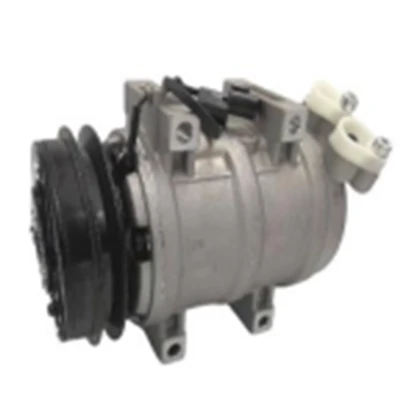
If you’re dealing with recurring compressor failures, or you want to make sure your fleet or customer vehicles don’t fall victim to vibration-related issues, let’s connect. We’ve helped repair shops cut compressor replacement costs by 40% by addressing vibration at the source, and we’ve helped fleets reduce downtime by 60% by implementing simple maintenance checks. We don’t believe in one-size-fits-all solutions, and we’re here to walk through your specific needs, answer any questions about vibration-related damage, and help you find the right compressor and setup for your situation. Let’s work together to prevent the kind of avoidable failures I see every day, the ones that leave drivers stuck in the heat, fleets losing money, and repair shops dealing with frustrated customers.
Agricultural AC Compressor Reference
- Automotive Compressor Vibration Analysis: Causes, Effects, and Mitigation Strategies. SAE International, 2021.
- Seal Degradation in Automotive HVAC Systems Under Varying Vibration Loads. Journal of Automotive Engineering, Vol. 235, No. 12, 2020.
- Bearing Fatigue in Reciprocating Compressors: The Impact of Random Vibration. Tribology International, Vol. 152, 2021.
- Oil Aeration in Scroll Compressors: Experimental Observations and Modeling. International Journal of Refrigeration, Vol. 128, 2021.
- Heavy-Duty Fleet Maintenance: Vibration Monitoring for Compressor Longevity. American Trucking Associations Technology and Maintenance Council, 2022.
Jiangsu Nuoyan New Energy Vehicle Air Conditioning Co., Ltd.
With abundant experience, we are one of the most professional automotive compressor manufacturers and suppliers in China. We warmly welcome you to buy customized automotive compressor at competitive price from our factory. Also, quotation is available.
Address: No. 7 Xingyuan Road, Huangqiao Economic Development Zone, Taixing City, Jiangsu
E-mail: nuyantech2026@163.com
WebSite: https://www.nuyantech.com/
