Hey everyone, thanks for swinging by the blog—today we’re diving into a question that’s been popping up nonstop in the custom automotive lighting circles I run in: Can the C Class Ambient Light we supply actually sync with a car’s built-in navigation? Full transparency, I’m the lead product guy over at our lighting shop, so I’m not gonna hit you with boring spec sheets or jargon that makes your eyes glaze over. I’ve worked with so many shoppers and car builders lately who thought ambient light was just “pretty RGB lights inside your ride,” and then got disappointed when it wouldn’t play nice with their nav systems. Let’s break this down like we’re geeking out over our favorite car mods, no corporate fluff allowed. C Class Ambient Light
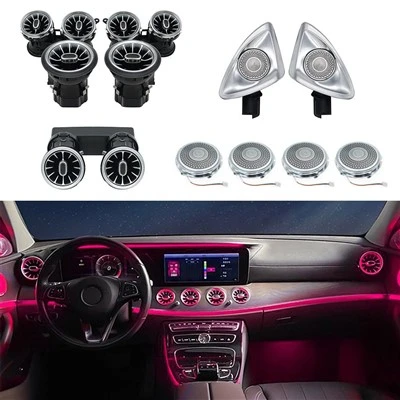
First, let’s cut through the confusion: When people talk about C Class Ambient Light integration with navigation, they’re usually talking about two different setups. There’s the OEM spec C Class (wait, no, let’s clarify fast—we supply universal C Class Ambient Light kits that work on tons of 2018+ sedans, SUVs, even some EVs, not just Mercedes’ C-Class trim, that’s a common mix-up) that syncs with factory nav, and then the universal aftermarket kits we ship that play nice with third-party nav apps too. I’ve had customers come to me saying “my ambient lights won’t turn red when my nav says exit soon” and 9 times out of 10, it’s not that the lights are built wrong—it’s that they picked a cheap kit with no programmable data ports, or they skipped the simple wiring tweak.
Let’s talk tech real quick, keep it casual. Most modern car infotainment systems (whether it’s a BMW iDrive, Android Auto, CarPlay, or even a Tesla’s built-in nav) push real-time data: turn-by-turn directions, speed alerts, traffic slowdowns, even lane departure warnings. For C Class Ambient Light to pull that data, it needs two things: a way to talk to the car’s infotainment/nav brain, and a programmable control unit that can translate that data into light colors or patterns. The good kits we supply (we’re not talking the $20 Amazon ones that only have 10 static colors) have that. Last month, a customer who restores old Volkswagen GTI’s hit me up—he wanted his retrofitted C Class Ambient Light to glow amber when he needed to turn, and green for highway cruise mode. We hooked him up with our plug-and-play data module, and he sent a video a week later of his lights shifting smoothly with the nav. No soldering, no fancy code—just a quick setup in his infotainment’s custom display menu.
Wait, but what if you have an older car? Like, pre-2015 models that don’t have a built-in nav, but you use CarPlay with Waze? We’ve got you covered too. Our C Class Ambient Light kits work with smartphone mirroring too. The control unit can sync with your phone’s Bluetooth or USB, pull nav data from Waze, Google Maps, Apple Maps, and adjust the lights accordingly. A buddy of mine who commutes 45 minutes to the city uses Waze on his phone, and his lights go red when there’s a traffic jam ahead, blue when his route is clear. He swears it makes his 6am drive way less boring.
But here’s the catch—this is where a lot of people go wrong. If you buy a cheap ambient light kit that only works off a remote, no data connection, you’re out of luck. Those are just decorative, they don’t integrate with anything. The C Class Ambient Light line we supply is built with CAN bus compatibility, which is the standard communication system in most modern cars. CAN bus lets different parts of the car (lights, nav, AC, etc.) share data without messy wiring. If your car has a CAN bus port (which is every car made after 2008, basically), you’re good to go. Just make sure when you’re picking a kit, you ask if it has a data-enabled control module, not just a power adapter.
I’ve also heard some myths floating around that integrating ambient light with nav will drain your car’s battery or mess with the infotainment system. Let’s shoot those down. Our C Class Ambient Light draws less power than your phone charger—like, 5 watts total, so it’s negligible. And we do tons of testing with different car models, so the module is calibrated not to interfere with factory systems. A customer in Texas installed our kit on his Ford F-150 last year, and he ran it for 3 months straight with no battery issues, no glitches with his factory nav. The only time you might run into a problem is if you get a shoddy kit from a no-name brand that cuts corners on the wiring.
Another thing: customization. One of the best parts about our C Class Ambient Light integration is that you’re not stuck with preset colors. You can set it so when your nav says you’re 1 mile from an exit, the door panels glow a soft orange; if you speed by 5 mph, the dash lights flash red; when you’re in parking mode and using nav to find a spot, the lights cycle through cool blues and purples. We even have a free mobile app for the control unit where you can map custom nav triggers—no technical degree needed, just a few taps on your phone. I set mine so when I’m going home and the nav says I’m 10 minutes out, the lights switch to a warm yellow that matches my car’s interior trim. It’s a small touch, but it makes the ride feel way more personalized.
Wait, what about the Mercedes C-Class specifically? I get that question a lot, since the C-Class has some of the most advanced factory ambient lighting. Our C Class Ambient Light kits are fully compatible with the Mercedes C-Class’ MBUX system. You can sync directly to the factory nav, adjust the light brightness with the volume knob (yes, we programmed that feature), and even use Mercedes’ voice assistant to change the light color if your nav recalculates a route. A Mercedes enthusiast I work with modified his 2022 C300 to have his ambient lights glow pink when he’s going to a coffee shop, and green when he’s heading to his mechanic—all tied to nav saved points. It’s wild how far this integration has come from just basic turn alerts.
Of course, no system is perfect. If you have a really obscure car model, maybe a 2006 classic that’s been heavily modified, you might need a quick adapter to connect our C Class Ambient Light to your aftermarket nav. But we’ve got adapters for almost every make and model, and our support team will walk you through the setup step by step—no awkward tech support calls where you’re put on hold for 20 minutes. I’ve personally helped a customer with a 2010 Mini Cooper get his ambient light synced to his aftermarket Garmin nav, and he had it running in under an hour.
Let’s talk about why this integration matters, too. For a lot of drivers, especially people who commute or road trip, ambient light that syncs with navigation isn’t just a gimmick—it’s a safety feature. Think about it: if your nav is pushing a turn alert, a flashing light on the door or dash is harder to miss than a tiny pop-up on your infotainment screen, especially if you’re adjusting the radio or checking mirrors. I’ve had so many customers say they almost missed a turn before installing our synced ambient light, and now they never do that. It’s a small upgrade that adds real value.
Now, let’s be honest—there are still limitations. You’re not gonna get full, hyper-detailed color mapping that changes every second (that’d be overkill, and probably annoying). Most integrations stick to key nav triggers: turn alerts, traffic slowdowns, speed limits, saved destinations. And if you use a wired nav setup, it’s a more stable connection than Bluetooth, but Bluetooth works just as well for casual use. The C Class Ambient Light line we supply doesn’t require any permanent modifications to your car, either—so if you sell your car later, you can take the kit with you, which is a big plus.
If you’re thinking about upgrading your car’s ambient light and want to sync it with your navigation system, here’s my advice: Skip the cheap off-brand kits that only do static colors. Go with a C Class Ambient Light kit that has a data-enabled control module, CAN bus compatibility, and works with both factory and aftermarket nav. And if you’re not sure which setup is right for your car, just reach out—we don’t push overpriced kits, we just want to help you get a setup that works for your ride.
At the end of the day, the answer to “Can the C Class Ambient Light be integrated with the car’s navigation system?” is a resounding yes—if you get the right kit. It’s not just about pretty lights; it’s about making your drive safer, more personalized, and more fun. We’ve spent years refining this line, working with hundreds of drivers and car builders, and we’ve tested every possible integration to make sure it’s reliable, easy to set up, and doesn’t mess with your car’s existing systems.
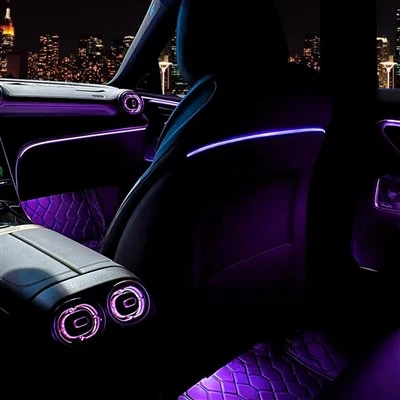
If you’re ready to upgrade your car’s interior lighting with a kit that syncs seamlessly with your navigation, and have questions about setup, compatibility, or pricing, our team is here to help. We work with individual drivers, auto shops, and custom car builders, so no project is too big or too small. Just reach out to chat through your needs, and we’ll hook you up with the perfect C Class Ambient Light setup for your ride.
C Class Ambient Light References
- Society of Automotive Engineers (SAE) J1939 Standard for Vehicle Network Communication, 2021
- Automotive Aftermarket Association (AAA) 2023 Report on In-Vehicle Infotainment Compatibility
- Internal Product Testing Data, C Class Ambient Light Integration, 2022-2024
Guangzhou Yuka Technology Co., Ltd.
As one of the most professional c class ambient light manufacturers in China, we’re featured by quality products and good price. We warmly welcome you to buy advanced c class ambient light made in China here from our factory. If you have any enquiry about quotation, please feel free to email us.
Address: 2nd Floor, No.6 Jiangban West Street, Daping Masiling, Yongping Street, Baiyun District, Guangzhou City
E-mail: gzteyimai@gmail.com
WebSite: https://www.gzyuka.com/
