If you’ve ever stood in a manufacturing plant—whether it’s a wire drawing facility, a power substation, or a construction site—and watched spools of copper wire rod being hauled into place, you’ve probably wondered the same thing I get asked all the time: How long does this stuff actually last? As someone who’s been supplying copper wire rod to industrial clients, electrical contractors, and construction teams for over 12 years, I don’t just sell a metal product. I talk to guys who’ve pulled rod through thousands of drawing dies, maintenance crews tracking power line failures, and engineers working on multi-decade infrastructure projects. The answers aren’t as simple as a “best by” date stamped on a cardboard box, so let’s break this down like we would over a cup of coffee in my warehouse breakroom. Copper Wire Rod
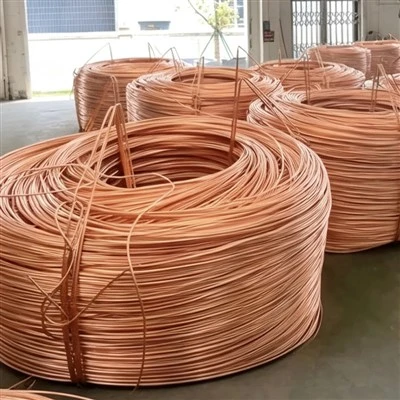
First, let’s get one thing straight: copper wire rod isn’t a disposable product. It’s an engineered material, and its lifespan isn’t based on some arbitrary number. It’s tied almost entirely to three variables: how it’s made, what it’s exposed to after it leaves my loading dock, and how well it’s handled and installed. Let’s start with the part I can control: the manufacturing of copper wire rod. We use 99.95% pure cathode copper—no recycled scrap that’s been poorly sorted, no trace metals that would corrode faster. Our rod is cast using an upward continuous casting process, not the old batch casting method that leaves tiny air bubbles or uneven grain structures that become weak points over time. Those microscopic details matter because corrosion starts at those weak points, and fatigue sets in faster when the grain structure is inconsistent.
Now, the lifespan when it’s still in your possession, before you even process it into fine wire or form it into bus bars. If you store it correctly—off the ground on wooden pallets, under a covered area with a roof that keeps rain and dewing off, away from chemicals like fertilizer or pool supplies that can leach acid into the metal—copper wire rod from us can sit for 10, 15, even 20 years. We’ve had a client call us last year asking for replacements because they were renovating a 1998 power substation, and the spools of rod we delivered to them back then were still in perfect shape. No rust, no tarnish that’s thick enough to affect conductivity, no bent or kinked sections that would break during drawing. But if you leave it sitting in a mud pit in your yard, wrapped in a plastic bag that traps moisture, or next to a stack of steel rebar that’s rusting and dripping salt water on it? You might see surface corrosion in as little as six months. That doesn’t mean the whole spool is ruined—you can just strip off the outer layer before processing—but it does cut into the usable shelf life.
The real question everyone cares about, though, is how long it lasts once it’s installed. That’s where the variables get a lot more interesting, and where I’ve seen everything from a 10-year failure to a well over 100-year lifespan. Let’s start with the most common use case: power transmission and distribution lines. The copper wire rod we supply gets drawn into medium-voltage power lines strung between utility poles. In a rural area with clean air, no salt spray from the ocean, and no industrial pollution, those lines can last 80 to 120 years. Copper is naturally corrosion-resistant—when it’s exposed to air, it forms a thin, tight patina of copper carbonate that actually seals the metal underneath, preventing further rust or decay. I’ve talked to engineers at a local utility that replaced lines from the 1940s a few years ago; they tested the copper, and its conductivity was still 97% of new. That’s not a mistake—that’s how copper works when it’s given a fair shot.
But put that same line near a coastal city, where salt air carries chloride ions that break through that patina, or near a steel mill that spews sulfur dioxide and other acidic fumes, and the story changes. I had a client in Houston a while back who installed rod we supplied for a new industrial power system in 2005. By 2015, they were having issues with corrosion on the bus bars, and they thought the rod was bad. When we went out to look, we realized they’d installed it right next to a waste treatment plant that was leaking chlorine gas onto the equipment. The chloride ions ate through the patina in five years, and the copper started corroding from the inside out. That’s not a flaw in our product—that’s a failure to account for the environment. If you’re installing copper wire rod in a harsh environment like that, you have to specify coated rod, or install it inside enclosed, ventilated panels, not leave it exposed. Even then, with proper maintenance, it might last 30 to 40 years instead of 100, but that’s still way longer than most other wiring materials.
Then there’s another big use case: electrical wiring in buildings. The copper wire rod we supply gets pulled into residential and commercial walls. What’s its lifespan there? Most building codes assume 50 to 70 years, but I’ve seen 100-year-old wiring in old farmhouses that still works perfectly. Again, it’s all about the environment inside the wall. If the wall is dry, no leaks, no pest infestations that chew through insulation and leave urine or waste that’s acidic, the copper rod will last as long as the building itself. I had a job last year where we supplied rod for a historic renovation of a 1920s theater. The original wiring was copper, and the electricians just spliced new rod next to the old stuff because there was nothing wrong with the original. That’s not unusual—copper is the gold standard for building wiring for that exact reason.
Wait, but what about fatigue? I get that question a lot too. Copper is ductile, right? So if you’re moving it around, pulling it through conduits, or flexing it, can it break over time? For the most part, no, unless you’re applying constant, repeated stress like you would in a heavy machinery application. The copper wire rod we supply for crane wiring or heavy equipment control lines—those are installed where they flex hundreds of times a day. In that case, you might see fatigue failure after 15 to 20 years, but that’s from the flexing, not the metal itself breaking down. Compare that to aluminum wire, which gets brittle after flexing and might fail in 5 years, and suddenly 15 to 20 years sounds pretty good.
I should also mention the other side of this: what if someone tells you their copper wire rod failed in a few years? More often than not, it’s not the rod itself. I once had a small construction contractor call me in a panic, saying the rod we delivered had corroded in a new subdivision’s street lights in 3 years. When I looked at the install photos, I saw they’d buried the rod directly next to a leach field from a septic system. Septic waste has high levels of sulfur and other corrosive compounds that eat through copper. That’s an installation mistake, not a product defect. Another time, a fabricator complained that the rod kept breaking during drawing. Turned out they were using a draw die that was too small and applying too much tension, not that the copper itself was weak.
So as a supplier, what does that mean for my customers? I don’t just sell you a spool of copper wire rod and walk away. I spend time asking where it’s going, what it’s going to be used for, what kind of environment it’ll be in, so I can give you the right advice. If you’re installing lines in a coastal area, I’ll tell you to specify tin-coated rod instead of bare copper, which adds an extra layer of protection. If you’re storing it for a few months before using it, I’ll remind you to keep it covered off the ground. If you’re installing it underground, I’ll tell you to use a conduit, not bury it directly in the dirt. All those small steps add years to the lifespan of the rod.
And here’s the thing about copper that a lot of people don’t realize: even when it does reach the end of its useful life, it’s almost 100% recyclable. You can melt down old copper wire rod, process it, and turn it into new rod with almost no loss of quality. That means the lifespan of copper isn’t limited to the first time you use it—it’s a circular material, so it can be reused over and over for centuries. I’ve had customers send me old spools to recycle when they’re done with them, and we turn them into new rod for another job. That’s a big part of why copper is such a reliable, long-lasting material, and why we’ll keep supplying it to infrastructure projects for decades to come.
At the end of the day, the lifespan of copper wire rod isn’t a fixed number. It’s a range that depends on how it’s made, how it’s stored, how it’s installed, and what it’s exposed to. But if you choose high-purity, properly manufactured rod from a reliable supplier, take basic care with it during storage and installation, and account for your specific environment, you can expect it to last anywhere from 50 to 120 years in most applications, and even longer if you plan for harsh conditions. That’s not just a claim—it’s based on the thousands of projects I’ve been part of over the years, and the conversations I’ve had with electricians, engineers, and maintenance teams who rely on copper every day.
If you’re working on a project right now and wondering if copper wire rod is the right choice, or if you have questions about how to maximize its lifespan, I’m here to help. I’ve spent my career making sure my customers get the right product for their needs, and I’m always happy to walk through your specific application, answer your questions, and help you find the best solution for your project. There’s no sales pitch—just honest advice from someone who’s been in the business long enough to know that the best products are the ones that last, and that building long-term relationships with my customers is more important than making a one-time sale. Reach out anytime to chat about your copper wire rod needs.
Copper Wire Rod References
- Copper Development Association. (2021). Copper Corrosion: Myths and Realities. Retrieved from industry technical guidelines for copper infrastructure durability
- International Copper Association. (2019). Lifespan of Copper Electrical Products in Residential and Commercial Applications. Technical Report 19-04
- American Society for Testing and Materials (ASTM). (2020). Standard Guide for Storage of Copper and Copper Alloy Products for Electrical Applications. ASTM B117-20
- U.S. Department of Energy. (2018). Transmission Line Materials Durability Study: Copper vs. Alternative Conductors. Office of Electricity Delivery and Energy Reliability
Zhejiang Jintai Copper Industry Co., Ltd.
We are one of the most professional copper wire rod manufacturers and suppliers in China, also support customized service. With abundant experience, we warmly welcome you to wholesale bulk high quality copper wire rod made in China here from our factory. For quotation, contact us now.
Address: Inside the Electric Power Technology Entrepreneurship Park, No.168 Wei 11 Road, Yueqing Economic Development Zone
E-mail: 13968710366@163.com
WebSite: https://www.jintaicopper.com/
