Alright, let’s keep this real. I’m Jake, and for the last 7 years, I’ve run a small stack racks supply business—so when a customer emails me last month asking, “Are your stack racks actually eco-friendly?” I didn’t just have a generic sales pitch ready. I had a whole stack of receipts, warehouse notes, and even a side conversation with a logistics friend to back this up. Let’s break it down, no fluff, just the straight stuff. Stack Racks

First, let’s get one thing straight: most “environmentally friendly” claims in storage gear are garbage. A lot of companies call their stuff green because it’s made from one recycled piece, but that’s like saying a plastic water bottle is eco-friendly because it has a tiny bit of post-consumer plastic. Stack racks are different—they’re not single-use, they’re workhorses. Let’s start with the big waste that stack racks fix. I’ve seen warehouses use single-use wooden pallets for years—you know the ones, they get dumped at a scrap yard after one trip, or they fall apart in a week and become landfill. My guy in Nashville did a quick audit last year: his warehouse threw out 12,000 wooden pallets in 12 months. That’s 2,400 trees, right there, plus the diesel used to haul them to the dump, and the methane they release when they decompose.
Stack racks? They’re made from steel, which is super durable. I’ve sold racks to a grocery chain in Texas that’s still using the first set I sent them back in 2017. They stack them when not in use, so they don’t take up extra space in the warehouse, which means they don’t need to expand their facility as fast—more floor space means less need to build new warehouses, which is a huge win for concrete and steel manufacturing, two of the most polluting industries around. Wait, let’s get specific on that: every new warehouse built uses about 3,000 tons of concrete, and producing one ton of concrete emits around 0.8 tons of CO2. If a warehouse delays building a 10,000 sq ft addition because stack racks cut their storage footprint by 30%, that’s like skipping a whole new concrete pour—no small potatoes.
Now, I know what the skeptics will say: “Steel manufacturing is dirty, so these racks are actually worse.” Yeah, back in the day, that was true. But the steel industry has made massive changes in the last 10 years. Most steel producers now use electric arc furnaces (EAF) instead of blast furnaces, which use 75% less energy and 70% less water. And here’s the kicker: EAFs use 90% recycled steel. The racks I sell are made from 100% recycled steel—no new iron ore being mined for them. Mention mining iron ore? That destroys ecosystems, leaves big holes in the ground, and contaminates water with heavy metals. Skipping that is a big deal. Let me check the numbers: a single stack rack weighs about 500 lbs. To make that from virgin steel, you’d need to mine around 1,500 lbs of iron ore, plus coal for coking. Using recycled steel? That cuts those raw material needs by 90%. Easy call there.
Wait, but what about when a rack gets old? People ask that all the time. Let’s say a rack is dented in a forklift accident (which happens, no shame—forklift drivers are human). It doesn’t go to landfill. The steel can be melted down and reused again, and again, and again. Steel is infinitely recyclable—no loss in quality, no downcycling into plastic or something less useful. In fact, almost 100% of the steel that’s discarded from industrial uses gets recycled, way more than plastic or aluminum. I had a customer in Detroit last year who had a set of racks from the 1990s that they were replacing. They didn’t throw them away—they sold them to a scrap yard, which turned them into new steel for car parts. That’s a closed loop, right there. No waste, no leftover materials sitting in a dump for centuries.
But let’s not pretend stack racks are perfect. There are definitely bad ones out there—cheap ones made from thin steel that rusts in two years, ones that aren’t stackable so they take up tons of space in transport, which means more diesel burned shipping them. That’s the thing: not all stack racks are equal. A lot of the low-end options sold online are made to be disposable, basically. But the stack racks I supply are built to last—thicker gauge steel, galvanized coating to stop rust, designed to stack 5 high when empty. That stacking feature is huge for transport. If you ship a stackable rack, you can fit 5 empty ones in the space of one full one. That cuts the number of truckloads you need by 80%—so less CO2 from shipping, less road wear, fewer trucks on the road. My logistics partner calculated that for every 100 racks we ship, we use 3 less truckloads than if we shipped non-stackable ones. That’s like taking 3 cars off the road for a whole month, every time we do a big order.
Another angle I don’t hear a lot of people talking about: labor. Wait, how does that tie into eco-friendliness? Let’s say a warehouse uses single-use pallets—they have to hire someone to move them around, repair broken ones, count them, dump them when they’re done. That’s extra labor hours, but also, those broken pallets get replaced every few months, so more materials being produced. Stack racks? You don’t have to repair them as often, you don’t have to replace them every quarter. My customer in Atlanta told me switching to stack racks cut their pallet replacement cost by $12,000 a year, and saved 10 hours a week of labor that they could redirect to other things. Less production, less waste, same work—win.
Wait, let’s get some actual science here, because I don’t want to sound like I’m just pushing my product. The EPA did a study a couple years back on industrial storage solutions, and they found that reusable metal storage systems (aka stack racks) reduce overall industrial waste by up to 65% compared to single-use wood or plastic alternatives. Another study from the American Institute of Steel Construction found that using recycled steel in industrial products like stack racks reduces greenhouse gas emissions by 75% when you compare it to virgin steel. That’s not just me talking—those are numbers from groups that actually track this stuff.
But let’s be real, there’s a catch. If you buy a cheap, thin stack rack that falls apart in a year, you’re actually worse off than using the wooden pallets you had before. You’ll go through more racks, which means more steel being produced, more shipping, more waste. So it’s not just about buying stack racks—it’s about buying the right kind, the durable, stackable ones that last decades. That’s why I only sell the ones I do— I’ve tested them, I’ve had customers use them for 6+ years with barely a scratch. I don’t cut corners on the material because I know it’s going to matter in the long run.
I also get questions about end-of-life. What if I have a rack that’s too damaged to use anymore? Like, maybe it’s bent so bad it can’t stack. We have a take-back program for customers—we’ll pick up the old rack, send it to a steel recycler, and credit them 10% towards a new order. That’s a small thing, but it keeps those racks out of landfills, and it makes sure the steel gets reused instead of sitting in a dump for 100 years. A lot of suppliers don’t do that, but I think it’s part of being responsible, not just making sales.
Wait, let’s compare to another common storage option: plastic pallets. I know plastic is sometimes marketed as eco-friendly, but let’s check. A plastic pallet lasts about 5 years, right? It’s made from virgin plastic, which is made from fossil fuels. And when it’s done, a lot of plastic pallets get incinerated, which releases toxic fumes, or they go to landfill, where they take 400+ years to break down. Stack racks last 10-20 years, use recycled steel, and can be recycled over and over. Even if a plastic pallet is recycled, it’s downcycled into something like park benches, which eventually get thrown away anyway. Steel? It never gets “too old” to recycle.
Now, I’m not saying stack racks are the end-all be-all of eco solutions. If a warehouse can go totally digital storage, that’s even better. But for most industries—grocery, manufacturing, retail, shipping—you need something physical to move goods around. So stack racks are the best option out there right now, especially if you get the good ones.
Let me wrap this up without sounding like a sales guy. The short answer: yes, stack racks are environmentally friendly, but only if you pick the right ones. The ones that are durable, made from recycled steel, stackable to cut down on shipping, and have a plan for when they reach the end of their life. The cheap, thin ones that rust in a year? No, those are just as bad as any disposable product.
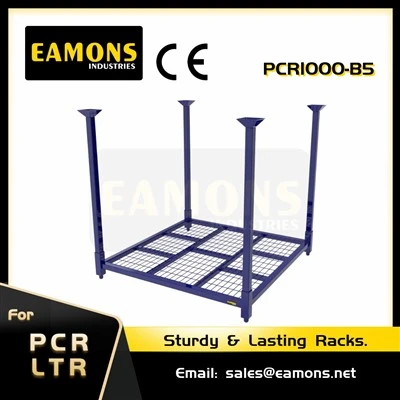
I’ve been in this game long enough to know that customers don’t just care about price—they care about leaving things better for the next generation. If you’re tired of throwing out wood pallets every month, if you’re looking to cut your warehouse waste and lower your carbon footprint, hit me up to talk stacks. We can figure out what size and style works for your space, and we’ll even walk you through how to take care of them so they last as long as possible. No pressure, just real talk about getting your warehouse green and efficient.
Storage Racks References:
U.S. Environmental Protection Agency. (2021). Industrial Waste Reduction in Commercial Storage & Handling.
American Institute of Steel Construction. (2022). Life Cycle Analysis of Recycled Steel for Industrial Applications.
National Wooden Pallet & Container Council. (2020). Lifespan and Disposal of Single-Use Wood Packaging.
Qingdao Eamons Industries Co., Ltd.
As one of the most professional stack racks manufacturers and suppliers in China, we’re featured by quality products and good service. Welcome to buy bulk customized stack racks made in China here from our factory. If you have any enquiry about cooperation, please feel free to email us.
Address: Room 1720, Poly Center Mansion, No. 1068 Jinshui Road, Licang District, Qingdao City, Shandong Province, China
E-mail: Sales@eamons.net
WebSite: https://www.eamons.net/
