As a supplier of Switched Reluctance Motors (SRMs), I’ve witnessed firsthand the growing demand for these motors in various industrial and commercial applications. One of the most critical aspects of operating an SRM effectively is controlling the current flowing through its windings. This blog post aims to provide a detailed overview of how to control the current in a Switched Reluctance Motor, leveraging my experience and expertise in the field. Switched Reluctance Motor
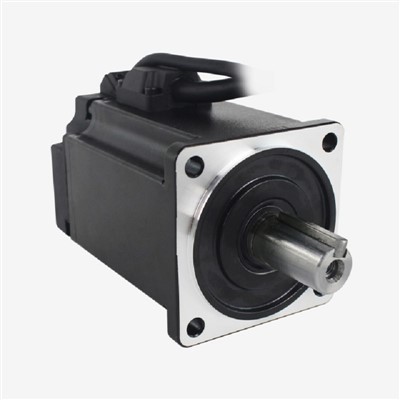
Understanding the Basics of Switched Reluctance Motors
Before delving into current control methods, it’s essential to understand the fundamental working principle of SRMs. Unlike traditional motors that rely on magnetic fields generated by permanent magnets or DC current in the rotor, SRMs operate based on the principle of reluctance torque. The rotor in an SRM is made of a ferromagnetic material with salient poles, while the stator consists of concentrated windings. When a current is applied to a stator winding, a magnetic field is created, and the rotor aligns itself with the stator’s magnetic field to minimize the magnetic reluctance.
The torque produced in an SRM is directly proportional to the square of the current flowing through the stator windings. Therefore, precise control of the current is crucial for achieving the desired torque and speed characteristics. Additionally, SRMs are known for their high efficiency, low cost, and robustness, making them suitable for a wide range of applications, including electric vehicles, industrial drives, and home appliances.
Current Control Objectives in Switched Reluctance Motors
The primary objectives of current control in SRMs are to:
- Achieve the desired torque: As mentioned earlier, the torque produced in an SRM is proportional to the square of the current. By controlling the current, we can precisely regulate the torque output of the motor, ensuring it meets the requirements of the application.
- Minimize torque ripple: SRMs are prone to torque ripple, which is the variation in torque output during each electrical cycle. High torque ripple can lead to increased mechanical stress, noise, and vibration, reducing the overall performance and reliability of the motor. Effective current control can help minimize torque ripple and improve the smoothness of operation.
- Improve efficiency: Controlling the current in an SRM allows us to optimize the motor’s operation and reduce energy losses. By adjusting the current based on the load requirements, we can ensure that the motor operates at its maximum efficiency point, resulting in lower energy consumption and reduced operating costs.
- Enhance fault tolerance: Current control also plays a crucial role in enhancing the fault tolerance of SRMs. In the event of a fault, such as a short circuit or an open circuit, the current control system can detect the fault and take appropriate actions to protect the motor and the drive system.
Current Control Methods for Switched Reluctance Motors
There are several current control methods available for SRMs, each with its own advantages and disadvantages. The choice of control method depends on various factors, such as the application requirements, cost, complexity, and performance. Here are some of the commonly used current control methods:
Hysteresis Current Control
Hysteresis current control is a simple and effective method for controlling the current in SRMs. In this method, the actual current flowing through the stator winding is compared with a reference current. If the actual current exceeds the upper limit of the hysteresis band, the power switch is turned off, and the current starts to decay. Once the current falls below the lower limit of the hysteresis band, the power switch is turned on again, and the current starts to increase. This process continues until the reference current is reached.
The main advantage of hysteresis current control is its fast response time, which allows for precise tracking of the reference current. However, it suffers from variable switching frequency, which can lead to increased electromagnetic interference (EMI) and higher switching losses.
PI Current Control
Proportional-Integral (PI) current control is another widely used method for controlling the current in SRMs. In this method, the error between the reference current and the actual current is calculated, and the PI controller generates a control signal based on this error. The control signal is then used to adjust the duty cycle of the power switch, thereby regulating the current flowing through the stator winding.
PI current control offers a relatively simple and straightforward implementation, with good steady-state performance. However, it may not be able to handle rapid changes in the reference current or disturbances effectively, resulting in slower response times and poorer dynamic performance.
Predictive Current Control
Predictive current control is a more advanced method that uses a mathematical model of the SRM to predict the future behavior of the current. Based on these predictions, the controller selects the optimal switching state of the power electronics converter to minimize the error between the predicted current and the reference current.
Predictive current control offers fast response times, excellent dynamic performance, and the ability to handle non-linearities and uncertainties in the motor model. However, it requires a relatively complex implementation and may be computationally intensive.
Field-Oriented Control (FOC)
Field-Oriented Control, also known as Vector Control, is a popular method for controlling AC motors, including SRMs. In FOC, the stator current is decomposed into two components: the torque-producing component and the flux-producing component. By independently controlling these two components, we can achieve precise control of the torque and flux in the motor.
FOC offers excellent dynamic performance, high torque density, and the ability to operate the motor at a wide range of speeds. However, it requires a more complex implementation and accurate knowledge of the motor parameters.
Practical Considerations for Current Control in Switched Reluctance Motors
In addition to choosing the appropriate current control method, there are several practical considerations that need to be taken into account when implementing current control in SRMs. These include:
- Motor Parameter Estimation: Accurate knowledge of the motor parameters, such as the inductance, resistance, and back EMF constant, is essential for effective current control. These parameters can vary with temperature, magnetic saturation, and load conditions, and therefore need to be estimated or measured periodically.
- Power Electronics Converter Design: The power electronics converter plays a crucial role in current control by providing the necessary voltage and current to the stator windings. The design of the converter should take into account factors such as the power rating, switching frequency, and efficiency of the motor.
- Sensor Selection: Current sensors are used to measure the actual current flowing through the stator windings. The choice of sensor depends on factors such as the accuracy, bandwidth, and cost requirements of the application. Hall effect sensors and shunt resistors are commonly used for current sensing in SRMs.
- Control Algorithm Tuning: The performance of the current control system depends on the proper tuning of the control algorithm parameters. This involves adjusting the gains of the controller to achieve the desired response time, stability, and accuracy.
Conclusion
Controlling the current in a Switched Reluctance Motor is a critical aspect of its operation, as it directly affects the torque, speed, efficiency, and reliability of the motor. By understanding the working principle of SRMs, the objectives of current control, and the various current control methods available, we can choose the most appropriate method for our application and implement it effectively.
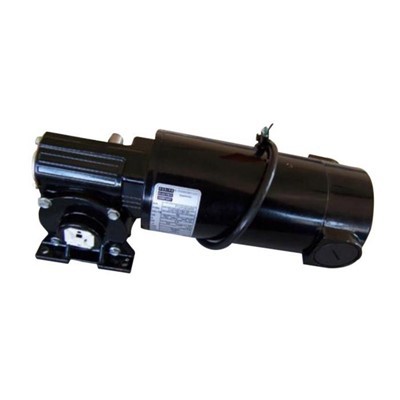
As a supplier of Switched Reluctance Motors, we have extensive experience in developing and implementing current control solutions for a wide range of applications. Our team of experts can work closely with you to understand your specific requirements and provide you with customized solutions that meet your needs.
Switched Reluctance Motor If you’re interested in learning more about our Switched Reluctance Motors or our current control solutions, please feel free to contact us. We look forward to the opportunity to discuss your project and explore how we can help you achieve your goals.
References
- Krishnan, R. (2001). Switched Reluctance Motor Drives: Modeling, Simulation, Analysis, Design, and Applications. CRC Press.
- Miller, T. J. E. (1993). Switched Reluctance Motors and Their Control. Magna Physics Publishing.
- Lyshevski, S. E. (2007). Electric Motor Drives: Modeling, Analysis, and Control. CRC Press.
Zibo Auric Mechanical and Electrical Technology Co., Ltd.
As one of the leading switched reluctance motor manufacturers and suppliers in China, we warmly welcome you to buy advanced switched reluctance motor for sale here from our factory. All customized motors are with high quality and competitive price.
Address: B419, High-tech Entrepreneurship Park, High-tech Zone, Zibo City
E-mail: cui@auricmotor.com
WebSite: https://www.auricmotor.com/
