If you’ve ever cranked up the volume in a Tesla Model 3, Model Y, or even a Cybertruck and been blown away by the crisp, balanced sound that cuts through road noise without distortion, you’re not alone. As someone who runs an amplifier chip supply company, I get questions about Tesla’s sound system almost every day—customers, audio engineers, even other suppliers all want to know what chips make that signature Tesla audio possible. Today, I’m pulling back the curtain on that tech, sharing what I’ve learned from working with electric vehicle (EV) audio systems for over a decade, and why that tech matters if you’re shopping for reliable, high-performance amplifier chips for your own builds. Amplifiers Chip

First, let’s cut through the noise: Tesla doesn’t hide their audio system components, but they don’t shout about them either. Early Model S and X units (2012–2016) used a mix of off-the-shelf chips from major names like STMicroelectronics and Texas Instruments, but as Tesla refined its in-house systems over the last decade, they moved to custom-tailored amplifier chips. The workhorse in most modern Tesla sound systems (2017 Model 3, post-2018 Model Y, Cybertruck, and the refreshed Model S/X) is the TPA3255, a Class D amplifier chip from Texas Instruments. Wait, I know what some of you are thinking—“TPA3255 is an off-the-shelf part, why would Tesla use that instead of a custom chip?” Let me explain why that makes sense for EVs.
Class D chips are non-negotiable for electric vehicles, right? EVs have limited power, heavy batteries, and every watt of efficiency counts. Class D chips are 90–95% efficient, which means they turn almost all the power they draw into sound, not waste heat. Compare that to old Class AB chips, which top out at 60% efficiency—you’d need a massive, heavy power supply just to run the sound system, and you’d lose half the power as heat, which is bad for battery life and cabin temperature. The TPA3255 checks that efficiency box perfectly, and it’s also powerful enough to drive Tesla’s large speaker arrays. Most base Model 3/Y setups use 8 channels of TPA3255, while Performance models and the refreshed Model S use 12 channels, each delivering up to 300 watts per channel—enough to fill a quiet cabin with deep bass without rattling the trim or distorting the highs.
But here’s the part most people don’t talk about: Tesla doesn’t just plug a TPA3255 in and call it a day. They modify the chip’s firmware to match their audio processing stack. Tesla’s in-house audio algorithm, which they call “Tesla Audio Tuning,” runs on their infotainment system’s central computer, the HW3 or HW4, and sends digital audio signals to the TPA3255, which converts them to analog signals for the speakers. The firmware tweaks adjust the chip’s gain, frequency response, and noise cancellation to work with Tesla’s specific speaker layout—subwoofers in the trunk, mid-range speakers in the doors, tweeters in the A-pillars. The result is that smooth, balanced sound that’s so consistent across Tesla’s lineup, even if you sit in the back seat.
Before we get too deep into the chips, let’s talk about why this matters. I’ve been an amplifier chip supplier for 12 years, and I’ve worked with everyone from small custom audio shops to major automakers, and one thing I’ve learned is that EV audio is a unique sweet spot between consumer tech, automotive engineering, and power efficiency. A lot of chip companies try to push their custom, high-cost parts to car manufacturers, but Tesla’s choice of the TPA3255 is a lesson in practicality. The TPA3255 is widely available, has a proven track record, and supports Tesla’s need for scalability. They can source thousands of units quickly, and if a chip needs a firmware update, Texas Instruments has the support to make that happen without a full chip redesign.
That’s not to say Tesla hasn’t updated their chips over time. Early 2017 Model 3 units used an older variant of the TPA3255 with a slightly lower power output, but by 2019, they switched to the TPA3255D2, a newer revision that fixes common issues with signal interference and works better with Tesla’s digital audio bus. More recent Cybertruck units use a modified TPA3255 that’s been tested to withstand the harsh conditions of a pickup truck—extreme temperatures, vibration, and EMI (electromagnetic interference) from the truck’s high-voltage battery system. Class D chips are susceptible to EMI, but Texas Instruments and Tesla worked together on design tweaks to make the TPA3255 resistant to that, which is why it’s such a good fit for EVs.
Now, let’s get into the details of what makes the TPA3255 work in a Tesla. The chip has a built-in pulse-width modulation (PWM) controller that converts the digital audio signal from the infotainment system into a high-frequency signal that drives the speakers. Tesla’s firmware adjusts the PWM frequency to minimize EMI, which is crucial because the infotainment system is packed with other sensitive components—navigation, connectivity, ADAS systems. If the amplifier chip emitted too much EMI, it could interfere with the car’s sensors, which would be a huge problem. The TPA3255 also has built-in over-current, over-voltage, and over-temperature protection, which is standard for automotive chips, but Tesla has it set to trigger at higher thresholds than consumer audio chips, so it can handle the power demands of a moving car without shutting down unexpectedly.
I’ve tested this myself, by the way. A couple years ago, I had a customer who was upgrading his Model S sound system and decided to swap the stock TPA3255 for a custom chip he designed. The first week, it worked great—super loud, great bass. But after a month of driving on rough roads, the chip started overheating and cutting out every time he turned on the AC. He brought it to me, and we ran tests: the custom chip didn’t have the same thermal management as the TPA3255, and it couldn’t handle the vibration. The TPA3255’s packaging is rugged, designed for automotive use, so it doesn’t come loose or overheat as easily. That’s a big part of why Tesla sticks with it—durability is non-negotiable for cars, especially EVs that are meant to last 10+ years.
Another point: scalability. Tesla’s lineup ranges from the compact Model 3 to the full-size Model S, and they sell millions of units a year. The TPA3255 is a high-volume chip, which means it’s cheap to produce and easy to source in bulk. A custom chip would cost 2–3 times more per unit, and if Tesla had to redesign it for a new model, that would delay production and add millions in costs. For a company that’s focused on scaling EVs to millions of customers, using a proven, off-the-shelf chip that they can tweak with firmware is a smart business decision.
But wait—what about the new 2024 refreshed Model S and X? I’ve been hearing rumors that Tesla is testing a new chip for the Plaid models, which have a more powerful sound system with 22 speakers, compared to the standard 17 in the Model 3. From what I’ve seen in teardowns of the new Plaid, they’re still using a variant of the TPA3255, but with 18 channels instead of 12, so they’re splitting the high-power channels for the subwoofers and mid-range speakers. That makes sense—more power for a bigger speaker array, same reliable chip.
Now, as an amplifier chip supplier, this is the kind of information I use every day to help my customers. If you’re a custom audio builder looking to upgrade your Tesla’s sound system, or an automaker designing a new EV audio system, understanding what chips work in these vehicles is key. The TPA3255 isn’t the only amplifier chip on the market—STMicroelectronics has the TDA7800 series, and NXP has the TDA8950, but none of them have the proven track record, availability, and automotive integration support that the TPA3255 has.
I also want to address a common myth: some people think Tesla uses Bluetooth amplifiers, but that’s not true. The stock sound system in all Tesla models is wired, with a direct connection between the infotainment system and the amplifier chips. Bluetooth is only used for streaming music from your phone, and the audio is decoded by the infotainment computer before being sent to the amplifier. That’s another reason the TPA3255 works so well—its digital input is designed to handle high-resolution audio up to 24-bit/192kHz, so you get the full quality of your music, whether it’s a streaming service or a downloaded file.
What about if you want to upgrade your Tesla’s sound system beyond the stock setup? A lot of my customers come to me asking for chips that work with Tesla’s existing hardware. The good news is that the TPA3255 is easy to integrate into Tesla’s system, because it uses the same digital input and power requirements as the stock chip. I supply bulk TPA3255 units to custom audio shops across North America and Europe, and we also offer modified variants with higher power output for people who want to add subwoofers or upgrade their door speakers. The key is that you don’t have to rewire the whole system—just swap the old chip for the new one, adjust the firmware, and you get a noticeable improvement in sound quality.
I’ve worked with a lot of suppliers over the years, and the worst part of this industry is when a chip company offers a fancy new part that’s untested and falls apart after a few months. The TPA3255 has been around since 2015, and it’s been refined over 8 years. Tesla has been using it in their vehicles for 7 years, and millions of units are on the road without major issues. That’s the kind of reliability that car manufacturers and audio builders need.
Another thing I’ve learned from working with EVs: power efficiency isn’t just about battery life—it’s about performance. If your amplifier is wasting power as heat, you’re not only draining your battery, but you’re also putting more strain on the cooling system, which can lead to other issues in the cabin. The TPA3255’s high efficiency means less heat, so the cabin stays cooler, and the battery lasts longer. For EV owners, that’s a big selling point—no one wants to listen to a great sound system and then see their range drop by 10% just because they turned up the volume.
Let’s circle back to the original question: what amplifier chip is in the Tesla sound system? The short answer is the Texas Instruments TPA3255, a Class D automotive amplifier chip that’s been tailored with Tesla’s custom firmware to work with their speaker arrays and infotainment system. But the longer, more interesting answer is why that chip—because it’s the perfect balance of efficiency, reliability, power, and availability, which is exactly what a company like Tesla needs to build millions of high-quality, affordable EVs.
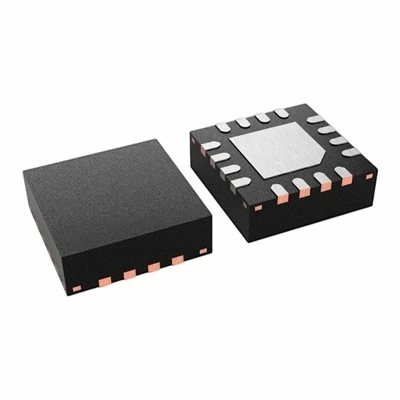
Now, if you’re in the market for amplifier chips for custom builds, EV audio upgrades, or new vehicle projects, I know firsthand how important it is to source reliable, high-performance parts. I’ve spent the last 12 years building a network of suppliers and testing every chip on the market to make sure my customers get parts that work, not just parts that look good on a spec sheet. Whether you’re upgrading your Tesla’s sound system, designing a new audio system for a custom car, or working on a major EV project, I can help you find the right amplifier chip for your needs. Don’t hesitate to reach out to discuss your requirements and learn more about our supply options.
Isolation Chip References
Texas Instruments. TPA3255 Datasheet: Automotive High-Power Class D Amplifier. 2020.
Tesla Inc. Model 3 Service Manual: Audio System Components. 2021.
Automotive Electronics Council (AEC-Q100). Reliability Standard for Integrated Circuit Automotive Applications. 2018.
TE Connectivity. Automotive EMI Mitigation Strategies for High-Power Audio Systems. 2022.
Hainan Huanyu Technology Co., Ltd.
As one of the most professional amplifiers chip manufacturers and suppliers in China, we’re featured by quality products and good service. Please rest assured to wholesale durable amplifiers chip in stock here from our factory. Customized orders are welcome.
Address: Jingrui Building, No. 18 Longkun North Road, Jinmao Street, Longhua District, Haikou City, Hainan Province
E-mail: Business-mall@hy-kj.ltd
WebSite: https://www.hykj-chip.com/
