If you walk through a steel mill’s production floor during a shift, the deep, low rumble of a blast furnace is impossible to miss—and that rumble fuels more than just steel. For me, as a ferro manganese supplier, every shipment I prepare traces back to that same furnace, a massive, airtight tower where raw materials transform into the alloy that’s the backbone of modern steelmaking. A lot of people assume ferro manganese is some obscure, lab-made metal product, but in reality, 90% of global ferro manganese comes from blast furnace operations, a process that’s stayed surprisingly consistent for decades even as steel technology has advanced. Let’s walk through how that happens, straight from the perspective of someone who’s stood by those furnaces, loaded railcars, and talked to steel mill managers who rely on my product to keep their lines running. Ferro Manganese
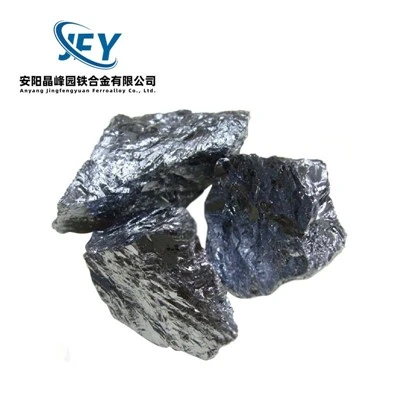
First, let’s get clear on what ferro manganese is, because without understanding the end product, the process doesn’t make sense. Ferro manganese is an alloy of manganese, iron, and small amounts of carbon, silicon, and other trace elements—its whole job is to add strength, hardness, and resistance to wear and corrosion to steel. Without it, steel would be brittle and prone to cracking, which is a non-starter for everything from construction rebar to car chassis to pipelines. For steel mills, buying the right grade of ferro manganese is make-or-break, and that starts with how we produce it.
The blast furnace process for ferro manganese isn’t that different from the blast furnaces used for primary iron, but the mix of raw materials is totally specific. Most people I talk to outside the industry mix up iron ore and manganese ore, and it’s an easy mistake: both are mined from the earth, both are oxides, but manganese ore is far rarer. The main manganese ores we use are pyrolusite (MnO₂) and rhodochrosite (MnCO₃), mined primarily in places like South Africa, Australia, and Gabon—countries we partner with directly to get high-grade ore without the contaminants that would mess up the final alloy. Along with manganese ore, we need two other key inputs: a carbon source, almost always metallurgical coke (the hard, pure carbon product made from coal, not the stuff you burn in a backyard grill) as both fuel and a reducing agent, and a flux, usually limestone, to bind impurities like silica into slag that we can separate later.
These three materials don’t just get dumped into the furnace randomly. The batch is carefully calibrated. For standard carbon ferro manganese (the most common grade, used in 70% of steel production), the ratio is roughly 4 parts manganese ore, 2 parts coke, and 1 part limestone, adjusted by just a few percentage points depending on the ore’s manganese content. If the ore has too much iron, we cut back on coke; if it has extra silica, we add a touch more limestone. This isn’t a guess—our process engineers test every ore shipment when it arrives at our facility, running chemical assays that take a few hours, so we can tweak the batch before it even goes into the furnace. That attention to detail is what makes a good ferro manganese supplier, because even a 1% off ratio can result in an alloy that’s too low in manganese for a steel mill’s needs, too high in carbon, or full of impurities.
Now, the furnace itself is a 30 to 40 meter tall steel tower, lined with refractory brick that can withstand temperatures up to 2,000 degrees Celsius—hot enough to melt any metal. It’s a countercurrent system, which means the raw materials go in the top, and the hot air (called blast air) goes in the bottom, moving in opposite directions to maximize heat and chemical reaction. This is where the magic happens, and where I’ve spent nights monitoring control panels because a furnace’s temperature can shift in minutes, and even a small drop can ruin a batch.
Let’s break down what happens inside, step by step. When we load the raw materials into the top of the furnace, they form a thick, compact column. As the blast air—preheated to around 1,000 degrees, sometimes even hotter, to save fuel—blows in from the bottom, the coke immediately starts burning, releasing massive amounts of heat and carbon monoxide gas. That gas rises up through the raw material column, heating and preheating the ore as it goes. The manganese ore, which starts as an oxide (you can think of it as MnO₂, where the manganese is bonded to oxygen), reacts with that carbon monoxide and the coke itself in a reduction reaction, where the oxygen is pulled away from the manganese, leaving pure manganese metal.
But here’s the catch: manganese oxide doesn’t reduce all at once. First, it turns into Mn₂O₃, then MnO, then finally metallic manganese—this happens as the ore moves down the furnace, getting hotter and hotter. At the same time, the limestone (calcium carbonate) breaks down into calcium oxide, which acts as a flux. Any silica or other impurities in the ore bind with the calcium oxide to form a low-density slag, which floats on top of the molten metal. That’s why we don’t want the slag mixing with the ferro manganese—if it does, we get a dirty alloy that’s useless for steel. So we have to draw off the slag regularly, usually through a tap hole higher up on the furnace, before tapping the molten metal through a lower tap hole.
I can’t stress enough how important temperature control is here. For standard ferro manganese, we need the furnace’s hot zone (the area where the reduction happens) to stay between 1,500 and 1,700 degrees Celsius. Too cold, and the reduction reaction doesn’t finish—you end up with ore that’s only partially reduced, mixed with rock, which makes the alloy useless. Too hot, and you get too much carbon dissolved into the metal, making it too brittle for most steel uses, or even melting the refractory brick lining, which is an expensive repair. Back when I started in this business 15 years ago, we didn’t have the automated control panels we have now; we had guys who stood next to the furnace with long iron rods, pulling samples of the slag to check its texture, guessing if the temperature was right. Now, we have sensors that measure temperature 100 times a second, but even still, there’s a reason veteran furnace operators are so valuable—they can spot a shift in the sound of the furnace or the color of the exhaust gas before the sensors even pick it up.
Once we tap the molten ferro manganese out of the furnace, it’s not done yet. It’s still full of excess carbon, silicon, and other impurities, and it needs to be refined to get the grade the steel mill ordered. For high-carbon ferro manganese (which is what most construction steel uses), we just cast it into ingots or grind it into pellets, ready to ship. But for lower-carbon grades, which are used in high-strength steels for cars or machinery, we need a second step: a refining process, usually an argon-oxygen decarburization (AOD) furnace, where we blow oxygen and argon through the molten metal to burn off extra carbon. That’s a different setup than the blast furnace, but as a ferro manganese supplier, we handle both processes because steel mills might need either grade depending on their product.
A common question I get from new steel mill clients is how we make sure the ferro manganese is consistent, batch after batch. A bad batch can shut down a whole production line, so consistency is everything. That’s why, at every step, we test every material. When manganese ore arrives, we run X-ray fluorescence (XRF) tests to check its manganese content, silica, and iron levels. When we load the furnace, we double-check the batch ratio, adjusting if a shipment of ore has 2% less manganese than expected. After tapping, we take a sample of the molten metal, run a quick chemical assay to confirm manganese content, carbon, and impurities, and only send it to be processed if it meets our strict standards. We also track every batch with a serial number, so if a steel mill ever has an issue with their steel, we can trace exactly which ore shipment, which furnace shift, and which raw material inputs went into that ferro manganese. That level of transparency is non-negotiable for a supplier—you can’t just send a batch and hope it works; you have to be able to back it up.
Now, let’s talk about the challenges of this process, because it’s not all smooth sailing. Blast furnaces for ferro manganese are energy-intensive—each ton of alloy takes around 3,000 kilowatt-hours of electricity, mostly for preheating the blast air, and that means there’s a big focus on efficiency and environmental impact, which is a big deal now. We’ve invested in upgrades over the years, like capturing the excess gas from the furnace to generate electricity instead of releasing it into the atmosphere, and reducing the amount of coke we use by 15% by optimizing our batch ratios. That’s not just good for the planet; it’s also how we keep costs reasonable for our clients, since energy is one of the biggest expenses.
Another challenge is manganese ore supply. Most of the world’s high-grade manganese is in just a few countries, so supply chain disruptions (like port strikes, shipping delays, or political changes) can throw everything off. That’s why, as a supplier, we’ve partnered with multiple mining operations and shipping lines, so if one source is disrupted, we can switch to another without delaying our clients’ orders. Steel mills can’t shut down their lines because of a missing raw material, so reliability is as important as the quality of the alloy.
I’ve seen firsthand what happens when ferro manganese quality is off. A few years back, a small steel mill I worked with tried buying a cheaper batch from a supplier who cut corners on the ore ratio. Their steel rebar came out with 2% less manganese than required, so it failed a strength test, and they had to recall thousands of tons of rebar, costing them millions in lost revenue and reputation. That’s the kind of mistake we never make at my operation. Every batch leaves our facility with a test certificate, detailing its chemical composition, and our clients know they can count on that.
At the end of the day, ferro manganese production via blast furnace is a balance between old-school industry know-how and modern technology. You need guys who can read the furnace like a book, who’ve seen every possible issue from temperature drops to slag blockages, and you need engineers who can run the chemical assays and calibrate the batches with precision. That’s what makes a good ferro manganese supplier— it’s not just about having access to furnaces and ore, it’s about the people who run them, who care as much about your steel mill’s success as their own.
If you’re a steel mill manager, a metallurgist, or someone who needs reliable, consistent ferro manganese for your production, we’re ready to work with you. We can customize grades, adjust batches to your specific needs, and deliver on time, every time. Reach out to start a conversation about your requirements.
Alloy References
- Manganese Institute. (2022). Global Ferro Manganese Production and Supply Chain Report.
- Steel Industry Association. (2021). Blast Furnace Operation for Ferro Alloys: Best Practices Guide.
- US Geological Survey. (2023). Mineral Commodity Summaries: Manganese and Ferroalloys.
- International Iron and Steel Institute. (2022). Energy Efficiency in Ferro Alloy Production.
Anyang Jingfengyuan Ferroalloy Co., Ltd.
As one of the most professional ferro manganese manufacturers and suppliers in China, we’re featured by quality products and good price. Please rest assured to buy bulk ferro manganese in stock here and get quotation from our factory. We also accept customized orders.
Address: Longquan Town Industrial Park, Long’an District, Anyang City, Henan Province
E-mail: Jingfengyuan@jfyferroalloys.com
WebSite: https://www.jfy-ferroalloy.com/
