If you’ve spent any time in the water treatment space, you’ve probably encountered fiberglass reinforced polymer (FRP) equipment—tanks, pipes, filters, and more—but you might still be wondering: are FRP environmental equipment actually suitable for this demanding industry? As someone who’s worked in FRP environmental equipment supply for over a decade, I’ve seen first-hand how this material has transformed water treatment operations, and I’m here to break it down with real-world context, not just technical jargon. FRP Environmental Equipment

First, let’s address the core of the question: suitability depends on understanding both FRP’s unique properties and the specific challenges of water treatment. Unlike metal equipment, which rusts, corrodes, and leaches contaminants over time, FRP is a composite material made of a polymer resin matrix reinforced with glass fibers. This structure gives it distinct advantages, but it’s not a one-size-fits-all solution. Let’s start with the biggest pain point in water treatment: corrosion. For facilities dealing with acidic wastewater, saline water, or chemically treated influent, metal tanks and pipes often fail prematurely. I recently worked with a municipal wastewater plant in the Midwest that was replacing carbon steel tanks every three to four years due to corrosion, costing them hundreds of thousands in replacement and downtime. After switching to FRP aeration tanks and pipework five years ago, they haven’t had a single corrosion-related issue. That’s not an isolated case—FRP’s resistance to a wide range of chemicals, from mild acids to harsh disinfectants like chlorine, makes it ideal for many water treatment applications.
But it’s not just corrosion resistance that matters. Water treatment facilities operate in extreme environments, with constant exposure to moisture, temperature fluctuations, and heavy loads. FRP’s high strength-to-weight ratio is a game-changer here. Metal equipment can be heavy, requiring complex installation and structural reinforcements, especially for large tanks or pipe runs. FRP tanks, by contrast, are lightweight enough to be transported and installed without heavy lifting equipment in many cases, which cuts down on installation time and labor costs. At the same time, when engineered correctly, FRP can withstand pressures up to 150 psi for standard applications, making it suitable for everything from low-pressure distribution pipes to high-pressure reverse osmosis (RO) modules. I remember a small-scale desalination project in Florida that used FRP pressure vessels for their RO system; even in the hot, humid coastal climate, the vessels have maintained their structural integrity with no signs of deformation, something that metal vessels often struggle with due to thermal expansion and contraction.
Wait, though—what about limitations? No material is perfect, and I’ve seen FRP fail when it’s misapplied. For example, some facilities dealing with very high temperature wastewater (over 180°F/82°C) need specialized high-temperature resin systems, and using a standard orthophthalic resin will lead to degradation over time. Similarly, FRP is not suitable for applications where it will be exposed to strong oxidizing agents like concentrated nitric acid, which can break down the polymer matrix. That’s why part of our role as a supplier is to work closely with clients to assess their specific water treatment process—whether it’s municipal wastewater, industrial process water, stormwater management, or desalination—to recommend the right FRP formulation, thickness, and design. It’s not just about selling a tank; it’s about ensuring it’s the right fit for their unique needs.
Let’s dive into specific water treatment applications where FRP has proven especially suitable, to make this more concrete. First, chemical storage and process tanks. Many water treatment plants store coagulants, flocculants, acids, and bases—all substances that corrode metal. FRP tanks are custom-molded to hold exact volumes, and their smooth interior surface minimizes material buildup, which reduces the need for frequent cleaning. A food and beverage plant I worked with recently was struggling with metal tanks that had residual buildup of sodium hydroxide, which contaminated their process water. Switching to FRP storage tanks eliminated that issue, as the non-porous surface doesn’t absorb or react with the chemicals they use.
Second, filtration systems. FRP is the material of choice for filter housings, multimedia filters, and activated carbon tanks. The uniform structure of FRP ensures consistent flow rates, which is critical for efficient filtration. Unlike metal housings, FRP doesn’t rust particles into the water, which is essential for plants that produce potable water. We’ve also supplied FRP pipe systems for municipal water distribution networks; their corrosion resistance means that over decades, they don’t leach metals into the water supply, a key concern for both regulators and the public.
Third, sludge treatment and biosolids management. Wastewater plants generate a lot of sludge, which is often acidic or alkaline and can be highly abrasive. FRP’s resistance to abrasion, combined with its chemical stability, makes it ideal for sludge holding tanks and dewatering equipment components. A large industrial wastewater treatment plant in Texas that handles oil and gas produced water switched to FRP sludge tanks two years ago; before that, their metal tanks were being eroded by the abrasive solids in the sludge, requiring repairs every six months. Now, those same tanks are still in perfect working order, cutting their maintenance costs by over 70%.
Of course, cost is always a factor when considering equipment upgrades. Some facilities assume that FRP is more expensive upfront than metal, but the total cost of ownership tells a different story. Let’s do a quick breakdown: a metal tank might cost 20-30% less upfront, but if it lasts 5 years with regular maintenance, repairs, and downtime, that adds up. An FRP tank might cost 40% more upfront, but with a lifespan of 20-30 years and almost no maintenance, the long-term savings are substantial. I’ve had clients who hesitated at first, but after running the numbers, they realized the payback period for FRP equipment is often less than 3 years. That’s a compelling argument for any facility manager working with tight budgets.
Another often-overlooked benefit is sustainability. FRP equipment is recyclable, and its long lifespan means less waste from replacing failed equipment. Additionally, because FRP is lightweight, transporting it to remote or rural water treatment sites reduces fuel emissions compared to moving heavy metal equipment. We also work with clients to recycle old FRP equipment when it reaches the end of its life, turning it into new composite materials instead of sending it to landfills. In an era where water treatment facilities are under increasing pressure to reduce their carbon footprint, FRP is a more environmentally friendly choice than traditional materials.
But here’s the thing: suitability isn’t universal. We’ve seen applications where FRP isn’t the best option, and we never push it where it doesn’t make sense. For example, high-impact, heavy-duty industrial processes that involve frequent physical damage might require steel reinforcements, or applications with extremely high temperatures or harsh oxidizing agents call for alternative materials like specialized alloys or concrete. Our job as a supplier is to guide clients through that decision, not just sell them a product. That’s why we start every project with an assessment: we ask about your influent characteristics, process temperatures, flow rates, maintenance budget, and long-term goals. Then we recommend the right FRP design, whether that’s a standard tank or a custom-molded component.
I recently had a conversation with a small community water treatment operator who was considering replacing their aging concrete pipe system. Concrete is prone to cracking and leaching lime into the water, which affects pH levels. They were torn between FRP and HDPE pipe. We walked them through the pros: FRP is more rigid, so it’s better for underground applications where it will be subjected to heavy soil loads, and it’s more resistant to chemical abrasion from the wastewater they’re treating. We also provided them with case studies of similar small communities that made the switch, so they could see the real results. That’s the kind of collaborative approach we take—no pushy sales tactics, just honest advice based on experience.
So, to circle back to the original question: Are FRP environmental equipment suitable for water treatment? The answer is a resounding yes, for most applications, when chosen and installed correctly. It’s not a perfect fit for every scenario, but its combination of corrosion resistance, strength, low maintenance, long lifespan, and sustainability makes it a superior choice for many water treatment challenges.
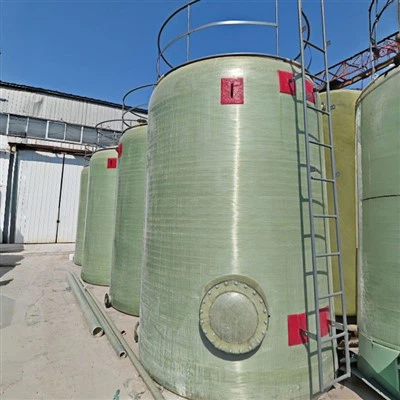
If you’re currently dealing with corroding equipment, high maintenance costs, or frequent replacements in your water treatment facility, it’s worth exploring if FRP is right for you. Whether you need storage tanks, pipework, filtration systems, or pressure vessels, we have the expertise to customize solutions for your specific needs. Don’t make a costly decision without understanding all your options. Reach out to our team to discuss your project, and we’ll provide a detailed assessment of what will work best for your operations.
Hand Truck References:
- American Water Works Association. (2020). Corrosion Control in Water Treatment Facilities: Best Practices for Material Selection.
- FRP Composites Industry Association. (2021). FRP Equipment for Municipal and Industrial Water Treatment: Performance and Lifespan Data.
- U.S. Environmental Protection Agency. (2019). Sustainable Material Choices for Water and Wastewater Infrastructure.
- National Sanitation Foundation International. (2022). Standards for FRP Equipment Used in Potable Water Systems.
Hebei Weihan Environmental Protection Equipment Co., Ltd.
We’re well-known as one of the leading FRP environmental equipment manufacturers and suppliers in China, featured by quality products and good service. Please rest assured to buy customized FRP environmental equipment at competitive price from our factory. Contact us for more details.
Address: No.666 Chuangye Road, Zaoqiang County, Hengshui City, Hebei Province
E-mail: weihanmachine@gmail.com
WebSite: https://www.whanfrp.com/
