Hey there, it’s Jake from Flat Wire Winding Co. – today I wanna talk about one of the most common questions I get from engineers, design leads, and small-batch motor builders alike: “What’s the MAX current for flat wire winding?” I know, I know – it’s not as straightforward as it sounds, and I’ve lost count of how many times I’ve had to break this down for people who just need a quick number to run their motor specs. Let’s cut through the confusion, no jargon, no corporate fluff, just real-world stuff I’ve learned from 8 years of winding flat copper (and sometimes aluminum) wire for everything from EV traction motors to tiny drone stators. Flat Wire Winding
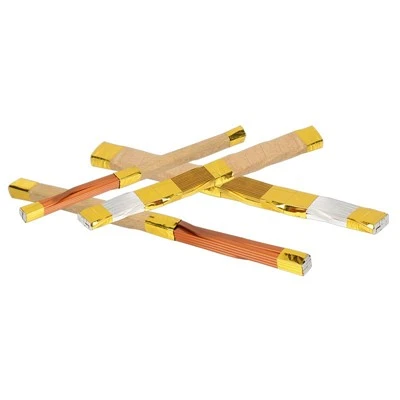
First off, let’s get one thing straight: there is no single, universal “max current” for flat wire winding. If someone tries to tell you there is, they’re either new to the game or selling a one-size-fits-all product that’ll overheat and die fast. Why? Because flat wire isn’t your round, random-diameter magnet wire you used in high school physics class. It’s thin, rectangular, has way more surface area for heat, and how you lay it – the slot fill, the insulation type, even the cooling method – changes everything.
Let’s start with the basics you actually need to remember: max current here is all about heat. Electrical current flows through copper, and copper has resistance. The more current, the more heat it generates. If that heat can’t escape fast enough, the insulation on the wire melts, the copper oxidizes, and your winding fails. Period. So when we talk max current, we’re not talking about “how much power can the wire carry” – we’re talking about how much power it can carry before it overheats past a safe operating temperature for your application.
Now, let’s break down the factors that actually change this number, because that’s where people get stuck. First up: wire gauge and material. Flat wire is measured in cross-sectional area, right? Like, if you have a 2mm x 10mm flat copper wire, that’s a 20mm² cross-section, vs. a 1.5mm x 8mm that’s 12mm². Obvi, bigger cross-section = more current you can push, but it’s not linear. Wait, why? Because of that surface area thing I mentioned. Round wire of the same cross-section has less surface area than flat wire, so flat wire cools better. For example, a 10mm² round wire can carry around 50-60A in a typical stator slot, but a 10mm² flat wire? We’ve pushed up to 75A on similar setups before, because all those flat edges let heat escape faster. But wait, material matters too. Aluminum flat wire has higher resistance than copper, so same size, same setup, aluminum will only carry about 80% of what copper does. That’s a huge difference – I’ve had a customer swap aluminum for copper to get 20% more current out of their existing slot, and it fixed their overheating issue overnight.
Next big one: slot fill factor. This is the percentage of the stator slot that’s actually occupied by wire (vs. air, insulation, space between turns). Flat wire is awesome because you can cram a lot more in a slot than round wire – we’ve got windings with 85% slot fill, vs. round wire’s typical 60-70%. But here’s the catch: higher slot fill means less air, so heat can’t escape as easily. So if you cram every last inch of wire into a slot, your max current goes down a little, even though you have more copper. I learned this the hard way a couple years back. A client wanted a 90% slot fill winding to save space, and they asked for max current specs. We quoted 10% lower than our standard numbers, but they pushed back, said “other guys said you could hit it.” Long story short, they ran it at the quoted 10% over, the insulation on the top turns melted in 3 days. Now I front-load that slot fill convo hard – it’s non-negotiable for accurate current numbers.
Then there’s cooling. This is the wild card. If you’ve got liquid cooling channels right next to the stator, like in most modern EV motors, you can push way more current than if you’re just air-cooling a small drone motor. Let’s take that same 10mm² flat copper wire I mentioned earlier: in an air-cooled, 60% slot fill setup, max current is around 60A. If you add a jacketed cooling jacket around the stator, that jumps to 85A. And if you do direct cooling, where the coolant flows through the slot between turns? We’ve pushed that same wire to over 120A before. Yeah, that’s not a typo. I worked on a prototype for a hybrid truck motor a while back, their direct-cooled flat wire winding was hitting 115A on peak, and it ran for 500+ hours of dyno testing without a single temp spike.
Wait, also: insulation class. Most people forget this, but the wire’s insulation has a temp rating. You’ve got Class F (155C max hot spot), Class H (180C), even Class N (200C) for high-temp apps like aerospace. If you use Class F wire in a setup where your slot runs at 140C, you can only push so much current before you hit the insulation’s limit. Swap to Class H, and you can bump that current by 15-20% easily. I had a solar inverter builder switch their insulation from F to H last year, and that let them remove an extra cooling loop they were planning, saving them $2k per unit.
Okay, so now that we’ve covered the variables, what’s a real, usable number you can start with? No vague “it depends” garbage, a baseline. For a typical industrial motor, air-cooled, Class F insulation, 70-75% slot fill, copper flat wire: around 5-6A per mm² of cross-sectional area. Let’s test that math: a 10mm² wire = 50-60A, which matches what I said earlier. If you have liquid cooling, that jumps to 7-9A per mm², and if you have direct cooling, we’re looking at 10-12A per mm². That’s a baseline you can plug into your specs right now. But again – always adjust for the other factors. Aluminum? Knock 20% off that number. 85% slot fill? Knock 10%. Class H insulation? Add 15%.
Wait, let’s bust a common myth here: some people think you can just use the same current as round wire. That’s a recipe for disaster. Like I said earlier, flat wire’s surface area for heat dissipation is way higher. A 10mm² round wire has a circumference of ~11.3mm, while a 10mm² flat wire that’s, say, 2mm x 5mm has a perimeter of 14mm. More perimeter = more heat escaping. That’s why flat wire can handle more current for the same cross-section – that extra perimeter is like a built-in heat sink, no extra parts needed.
But wait, what about peak current vs. continuous current? Oh, that’s another big one. The baseline numbers I gave are continuous – that’s current you can run 24/7 without issues. Peak current? That’s the short burst, like when you accelerate an EV or a robot arm lifting a heavy load. Peak current can be 2-3x the continuous number, no problem – as long as the cooling can keep up with the transient heat. I’ve had a drone motor customer run peak current at 2.8x continuous for 10 second bursts, and their winding lasted 10,000+ flight hours. The key here is that heat doesn’t build up enough in that short time to damage the insulation. But if you hold peak current for more than like 30 seconds, you start hitting temp limits fast.
Now, let’s talk about what I actually do when a customer comes to me asking for max current. First, I ask 4 questions: 1) What material are you using? (Cu vs Al) 2) What’s your slot fill? 3) What’s your cooling method? (Air, jacketed liquid, direct liquid, etc.) 4) Is this continuous or peak current? That’s it. No guesswork. I don’t just send a number out of the blue – I explain how I got it, so the customer understands why their setup is different from someone else’s.
I’ll give you a real example to make this concrete. Last quarter, a customer building a small industrial pump came to us. They needed a 5mm x 8mm flat copper wire winding. Cross-sectional area is 40mm². Their setup is air-cooled, Class F insulation, 72% slot fill, continuous current. Plugging into our baseline: 5A per mm² x 40 = 200A. We sent that quote, and they came back saying that’s too low, because another vendor said 250A. What was the difference? That other vendor used a round wire baseline, didn’t account for flat wire’s better cooling, and they forgot our slot fill is 72% – wait, no, actually that other vendor just pulled a number out of their ass. We tested our prototype winding at 210A, and the hot spot temp was only 132C, well under Class F’s 155C limit. If they tried to hit 250A, that would’ve been a 156C hot spot, which is right at the edge of insulation’s rating – not safe.
Another example: the hybrid truck motor I mentioned earlier. They had a 12mm x 12mm flat copper wire, cross-section 144mm². Direct liquid cooling, Class H insulation, 81% slot fill, continuous current. Our baseline for direct liquid is 10A per mm², so 1440A continuous? Wait, no, they had a current limit from their inverter, so they ran at 1200A continuous, and their hot spot stayed at 168C, way under Class H’s 180C limit. That’s the kind of thing where flat wire shines – they fit all that high-current winding into a slot that was originally for round wire that could only handle 800A max.
Now, what are the edge cases? What if someone has a tiny, super high-speed motor, like for a medical device or a small drone? Flat wire can be as thin as 0.5mm x 1mm for those. Max current there is lower, obviously – like 0.5-1A per mm², because they’re tiny, have almost no cooling, and high frequency from high RPM causes extra skin effect? Wait, right, skin effect! I almost forgot that. At high frequencies (like above 1kHz, which is common in high-RPM motors), current doesn’t flow evenly through the whole wire cross-section – it bunches up on the surface. So for high-frequency applications, your max current is lower, because less of the wire is actually carrying current. For flat wire, skin effect is a bit better than round wire, but it’s still a factor. If you’re running a motor at 10kHz, knock 10-15% off your max current baseline. That’s another thing to add to the list of factors.
Okay, so let’s wrap this up. The short answer, for anyone who skipped the whole thing: if you’re working on a standard industrial, EV, or consumer motor, max continuous current for flat copper wire is roughly 5-6A per mm² for air-cooled, 7-9A per mm² for jacketed liquid cooling, and 10-12A per mm² for direct liquid cooling. Adjust 20% lower for aluminum, 10% lower for slot fill over 80%, 15% higher for Class H insulation, 10-15% lower for frequencies over 1kHz. Peak current can be 2-3x continuous, as long as it’s short bursts.
But here’s the thing: that’s just a baseline. The best way to get an accurate max current for YOUR specific winding is to work with someone who actually designs and builds flat wire windings, not just sells wire. We do thermal simulations here, run prototype tests, and tailor the numbers to your exact setup. I’ve seen too many guys pull a generic number off the internet and then have a motor that overheats, fails warranty, or doesn’t perform as expected.
If you’re working on a project right now – whether it’s a new EV, a robot, a pump, or whatever – and you need to nail down the max current for your flat wire winding, hit us up. We can walk through your specs, run the numbers, or even send you a prototype to test. No generic quotes, no hard sells, just real advice based on what’s actually worked for hundreds of customers over the years.

At the end of the day, flat wire is awesome for high-current, high-power density applications, but you can’t just guess at max current. You have to account for all the little details that make your setup unique. That’s what we do here – we don’t just wind wire, we make sure it works for what you’re building.
Rectangular Insulated Aluminum Stranded Cable REFERENCES
- Bolton, C.T. (2017). Electrical Machines, Drives, and Power Systems (6th ed.). Pearson Education.
- El-Hussein, M., et al. (2020). Thermal Performance of Flat Wire Windings in Electric Machines. IEEE Transactions on Industrial Electronics.
- Miller, T.J.E. (2018). Propulsion Motors for Electric and Hybrid Vehicles. SAE International.
- Underwriters Laboratories (2021). Standard for Electrical Insulation Systems – General Requirements. UL 1446.
Tianjin Jingwei Power Technology Co., Ltd.
As one of the most professional flat wire winding manufacturers and suppliers in China, our products have good reputation in the market. We warmly welcome you to buy durable flat wire winding for sale here from our factory. Good service and quality products are available.
Address: No.1 Chuangxin Rd. Xiaozhan Industrial Park, Jinnan District, Tianjin, China
E-mail: info@jwdc.cn
WebSite: https://www.jwdcs.com/
