If you’ve ever worked in construction, manufacturing, or heavy rigging, you’ve probably spotted a weldable lifting lug hanging off a steel beam, storage tank, or heavy machinery part. And if you’ve ever had to spec one for a lift, you’ve probably stared at the term “shank length” and thought, “Wait—does that matter, and how do I get it right?” As a supplier of these lugs, I get this question all the time. It’s not the flashy part of the product, but skip getting the shank length wrong, and you’re risking a bad weld, a failed lift, or even safety issues. Let’s break this down like we would over a coffee at our warehouse floor—no stuffy engineering jargon, just real talk that works when you’re ordering lugs for your next job. Weldable Lifting Lugs

First, let’s cut through the basic definition: the shank of a weldable lifting lug is the straight, central part of the lug that sits between the top loop (the part your crane hook or shackle attaches to) and the flat base plate. That base plate is what actually welds to your workpiece, right? So the shank is the “bridge” between the load you’re lifting and the weld holding the whole thing on. Now, why does its length matter more than, say, the lug’s width or loop size? Let’s start with the biggest reason: weld quality. A lot of new builders or fabricators will just grab a generic lug and weld it on, but if the shank is too short, you end up with something called “interpass contamination” or even a lack of weld penetration. Wait, let’s make that plain. When you’re welding a lug’s base plate to steel, you need space for your weld gun or electrode to get all the way into the joint. If the shank is too short, the base plate sits almost flush to the workpiece, leaving no room for the welder to move their torch. That leads to a weak weld that might snap under load—not something you want when you’re hoisting a 10-ton steel tank into place.
But it’s not just weld penetration. Shank length also ties directly to the load rating of the lug. Every lug is engineered for a specific working load limit (WLL)—that’s the maximum weight it can lift safely, per OSHA and ASME standards we follow at our shop. If you cut a shank too short, the WLL drops, plain and simple. Why? Because the shank is what distributes the load from the hook down to the weld. A longer, properly sized shank spreads that load more evenly across the base plate and the weld, instead of concentrating all the pressure in one spot. Think of it like a door handle: a short handle might twist off if you yank it, but a longer one lets you apply pressure across a bigger area, so it holds. That’s the same idea here.
Now, how do you pick the right shank length? It’s not a one-size-fits-all number, which is why so many guys end up calling us when they mess up their first order. The main factors boil down to three things: the thickness of your workpiece, the size of your fasteners (wait, no—mostly welds, not fasteners) and the type of lift you’re doing. Let’s start with workpiece thickness. If you’re welding a lug onto a 1-inch thick steel beam, the base plate of the lug needs to sit flat against that beam, and the shank has to be long enough to avoid that weld access issue we talked about earlier. Most of our standard lugs have a shank length between 0.5 inches and 2 inches, but we make custom ones too, because sometimes you’ve got a 3-inch thick tank wall or a confined space where you can’t stick a big weld gun in.
Another big factor: shackle size. The loop at the top of the lug fits a specific shackle, right? If you’re using a ¾-inch shackle, the loop is sized for that, and the shank length relates to how the shackle sits when it’s loaded. If the shank is too short, the shackle might dig into the side of the base plate or the weld when you lift, creating sharp stress points that can crack the metal. We’ve seen this go wrong on jobs—guys order a lug with a shank that’s just a quarter-inch too short, and halfway through a lift, the shackle pin tears into the weld, dropping a load of steel parts and delaying the job by days. That’s the kind of headache we help customers avoid by getting the shank length right from the start.
Wait, let’s talk about OSHA and engineering standards too, because this isn’t just a “feel good” thing. All weldable lifting lugs sold in the US have to meet ASME B30.20, which is the standard for below-the-hook lifting devices. That standard lays out minimum shank lengths based on the lug’s WLL and workpiece thickness. For example, a lug rated for 5,000 lbs has a minimum shank length of 0.75 inches if your workpiece is less than 2 inches thick, but if your workpiece is thicker than that, you need a shank at least 1 inch long. We post that info right on our product specs, because we don’t want customers guessing—we’ve had too many bad calls from fabricators who ordered a cheap lug online that didn’t meet ASME specs, and it failed a load test before it even hit the job site.
Now, let’s clear up a common myth: some guys think a longer shank is always better. That’s not true. A shank that’s too long causes two problems. First, it adds unnecessary weight to your workpiece—if you’re lifting a lightweight aluminum part, a 3-inch shank lug is overkill and adds extra load you have to account for. Second, a too-long shank can cause what’s called “bending stress” when you lift at an angle. If you’re lifting something that’s not perfectly flat, a long shank will flex more, putting pressure on the weld instead of the straight, even load a shorter, properly sized shank would handle. We had a customer last year who ordered 20 lugs with 2.5-inch shanks for a series of steel brackets, and when he went to lift them, the lugs started bending mid-lift. Turns out he didn’t need a shank longer than 0.75 inches for his ½-inch thick brackets. We rushed him replacements, no extra cost, because we know getting this right the first time saves everyone time and money.
So how do you figure out what you need? Let’s walk through a quick, simple formula we use with every customer that calls us: First, measure the thickness of the material you’re welding the lug to. Let’s say it’s 1.5 inches. Then, check what WLL you need for your lift—let’s say 10,000 lbs. Now, add 0.25 inches to that workpiece thickness for weld access space. So 1.5 + 0.25 = 1.75 inches. That’s your minimum shank length. If you’re using a big shackle (like 1-inch) for that load, you might want to add another 0.125 inches to avoid that shackle digging into the base, making it 1.875 inches. Most of our standard lugs come in 0.5, 0.75, 1, 1.25, 1.5, and 2 inch shanks, so we can adjust to that. If you need something custom, we can make shanks up to 4 inches long, no problem—we do that all the time for big construction projects or heavy industrial machinery lifts.
Another tip: when you order, be specific. Don’t just say “send a lifting lug.” Tell us what you’re welding it to (thickness, material type—steel, aluminum, stainless, etc.), the maximum weight you need to lift, and if you’ll be lifting at an angle or in a confined space. A lot of fabricators leave out that last part, which is the most important. If you’re working in a tight space where you can only fit a 2-inch long weld gun, we’ll make sure the shank is exactly the right length so you don’t have to grind the base plate down and ruin the weld strength.
Wait, let’s also talk about common mistakes we see customers make. The biggest one is copying an old lug from a previous job, but not accounting for changes in the workpiece. We had a guy who ordered lugs for a tank that was 2 inches thicker than the last one he worked on, and he used the same shank length. Welds came out weak, and he had to re-do all 12 lugs on site, costing him an extra $2,000 in labor. That’s the kind of avoidable mistake we help with—just send us the details of your job, and we’ll suggest the right shank length before you order.
Another mistake: thinking shank length only matters for big loads. We’ve had a customer lifting a small 500 lb aluminum part for a custom machine, and he ordered a lug with a 0.25 inch shank. The weld was so weak, the lug pulled off when he tried to lift it, dented the part, and set his project back a week. Small loads use lugs too, and the same shank length rules apply—you don’t cut corners, even on the small stuff.
If you’re still confused, here’s the bottom line: the shank length of a weldable lifting lug isn’t just a measurement on a spec sheet. It’s the part that keeps your weld strong, your load safe, and your job on schedule. Too short, and you risk weak welds and failed lifts. Too long, and you add unnecessary weight and stress points. Getting it right means following ASME standards, checking your workpiece thickness and shackle size, and being specific about your job needs.
At our shop, we don’t just sell lugs—we help you get the right ones for your job. Whether you need a standard lug for a quick lift or a custom lug with a long shank for a confined space, we’ve got you covered. No hidden fees, no guesswork, just lugs built to hold up to the loads you’re lifting. If you’ve got questions about shank length, or you’re ready to place an order, reach out to our team of lifting lug specialists. We’ll walk through your job with you, make sure you get the right shank length, and get your lugs to you when you need them.
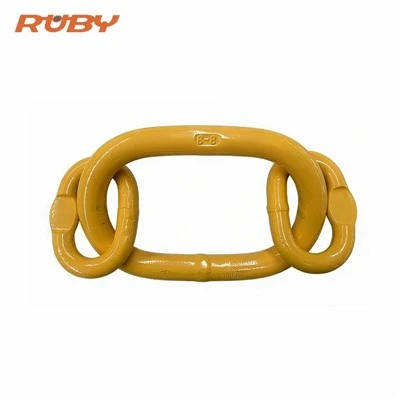
Don’t let a wrong shank length turn your lift into a disaster. We’re here to make sure your lugs are perfect for every job.
Weldable Lifting Lugs References
ASME B30.20-2021, Below-the-Hook Lifting Devices. American Society of Mechanical Engineers
OSHA 1926 Subpart CC, Cranes and Derricks in Construction. Occupational Safety and Health Administration
Manufacturer’s Standard for Weldable Lifting Lugs, Lifting Gear Manufacturers Association (LGMA)
Hangzhou Ruby Imp. & Exp. Co., Ltd.
As one of the most professional weldable lifting lugs manufacturers and suppliers in China, our products have good reputation in the market. Please feel free to wholesale durable weldable lifting lugs made in China here from our factory. Also, custom service is available.
Address: Taoyuan Industrial Park, Puyang Town, Xiaoshan, Hangzhou, Zhejiang, China.
E-mail: Sales5@z2lifting.com
WebSite: https://www.ruby-lifting.com/
