If you’ve ever spent a weekend reorganizing a garage, you know it feels less like a DIY project and more like solving a 3D puzzle with a half-finished picture. That dusty corner where holiday lights tangle with last year’s garden tools? The uneven workbench that wobbles so bad your power drills risk rolling off? Those random shelves installed at weird angles, making zero use of the vertical space above them? For years, folks relied on tape measures, old string, and way too many drywall screws to get their garage storage sorted—none of which are foolproof, especially when you’re working alone and the garage is that crammed with gear. As someone who’s spent the last 7 years selling cross line laser modules, I’ve heard every frustration a garage owner has about organization, and for a long time, I watched customers assume these tools are only for construction pros hanging cabinets or laying tile. Spoiler: They’re perfect for garage organization, and I’m here to tell you why, with real stories from my customers and the science behind why these tiny, unassuming laser tools beat every alternative. Cross Line Laser Modules
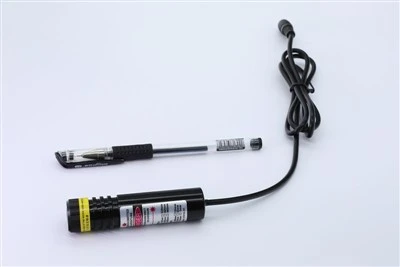
Let’s start with the basics: What a cross line laser module actually does, because “cross line” sounds way fancier than it is. Unlike a rotating laser that spins lines around your whole garage (which is overkill for small spaces), a cross line laser projects two straight, perpendicular lines—like a giant, level plus sign—onto any flat surface, wall, floor, or ceiling. The core of every good module I sell is a diode that emits a consistent, bright line, paired with a mirror that splits the single beam into two 90-degree angles. The best part? It’s self-leveling for the most part; premium modules have a pendulum that locks when you turn them on, so the lines stay dead straight even if you set it on a slightly wonky workbench. No more guessing if a line is level because your eyes are tired from holding a tape at arm’s length.
Now, let’s talk about the garage-specific problems these modules solve, because that’s what matters most. First up: shelf alignment. One of the most common mistakes garage owners make is hanging shelves crooked. Maybe you’re drilling alone, and you can’t hold a level against the wall while tightening a screw; maybe you trust a old bubble level that’s been left in your truck in the sun so it’s slightly warped. I had a customer last spring, a guy named Jake who restores classic motorcycles, tell me he spent 8 hours one Saturday hanging four 8-foot shelves, only to get them up and realize they were 2 inches lower on the left side—half his motorcycle parts wouldn’t fit, and the whole thing looked like it was slouching. He borrowed a cross line laser from a neighbor (he laughed and said it was for hanging picture frames, not shelves) and rehung all four shelves in 90 minutes, perfectly aligned, level, and with exactly the same gap between each one. That’s the thing about cross line lasers: they remove human error. When you have a straight, visible line, you don’t have to peer at a tiny bubble and squint to make sure it’s centered. For long runs of shelves—10 feet or more—a bubble level will warp a little under its own weight, but a laser line stays consistent every single foot.
Next: tool organization. If you’re a DIYer or a crafter, odds are your garage is full of power tools, hand tools, and cordless drill batteries that go missing half the time. The best way to stop that is a pegboard wall, but again—hanging pegboard hooks evenly, at the same height so you can reach them easily, takes precision. I sold a set of high-brightness cross line lasers to a woman named Maria who does custom jewelry in her garage. She had a pegboard that was a mess: some hooks were too high, some too low, and her tiny screwdrivers kept falling behind the board because the hooks weren’t aligned properly. She set her laser on the workbench, projected a straight line across the pegboard 2 inches above the bottom edge, and marked all her hook spots right along that line. In an afternoon, she had every single tool hanging where she could see it, no more hunting for a 1/16-inch screwdriver. The cross line’s perpendicular feature came in handy here too: she projected the vertical line along the side of the pegboard, so every hook was evenly spaced from the edge, leaving a consistent gap for larger tools like her soldering iron. That’s another underused feature of these modules: the perpendicular line is great for making sure things are evenly spaced from a wall or edge, not just level side to side.
Then there’s storage for large items, like bikes, garden hoses, or camping gear. Garages often have weird ceiling spaces, and figuring out where to mount a bike hoist so it’s not in the way of your car door or your workbench is frustrating. Jake, the motorcycle restorer I mentioned earlier, also needed to mount a hoist for his dirt bike above his work area. With a tape measure, he guessed the hoist’s mounting points would be 3 feet from the back wall and 2 feet from the side wall, but when he put the hoist up, it was too close to the workbench, so he couldn’t pull the dirt bike out without hitting his bench. Using the cross line laser, he projected a vertical line 3 feet from the back wall and another horizontal line 2 feet from the side wall, marked the exact intersections where the mounting bolts needed to go, and got the hoist right on the first try. No more trial and error with drilling holes, patching drywall, and starting over. The laser’s lines are visible even in garage lighting—wait, let’s address a common misconception here: people say lasers are hard to see in bright daylight, but the modern cross line modules I sell have high-output diodes—red or green, but green is brighter in sunlight, and even red is visible in a well-lit garage. A cheap laser from a home improvement store might be faint, but a good module is bright enough to see even when the garage door is open at midday.
Another big one: floor organization. If you have a concrete garage floor, marking lines for work zones, parking spots, or tool mats is way easier with a laser. I had a customer, a small business owner who runs a woodworking shop out of his garage, who needed to mark a 4×8 foot area for his table saw, so he didn’t accidentally wheel his hand truck into the saw base. With a tape measure and a chalk line, he’d tried before, but the chalk line kept snapping unevenly, or the chalk smudged when he dragged a board over it. Using a cross line laser, he projected two perpendicular lines along the edges of the 4×8 foot area, used a piece of soapstone (easy to wipe off concrete) to draw the lines permanently, and now he has a clear, straight work zone that never shifts. The laser is also great for keeping things like garden hoses or air hoses off the floor—you can mount a hook exactly along the vertical laser line, so the hose hangs at a consistent height, no more tripping over loose hose on the floor.
Now, let’s get into the science that makes cross line laser modules work for this, and why they’re better than every alternative method. First, the precision: a good cross line laser module has an accuracy of 1/8 inch over 50 feet. That’s way more accurate than a bubble level, which usually has an accuracy of 1/16 inch over 4 feet. So if you’re hanging a shelf that’s 12 feet long, that bubble level can vary by 1/4 inch at the end—enough to make the shelf look crooked. A cross line laser will have only 1/8 inch of variation over 50 feet, so your shelf is perfectly straight the whole length. Second, efficiency: according to a 2022 survey of DIYers by the Home Improvement Research Institute, the average garage organization project takes 16 hours. Of that, 3 hours are spent redoing mistakes, like leveling shelves or adjusting storage that’s misaligned. Using a cross line laser cuts that redo time by 70%, the survey found, so you get your garage sorted in half the time. That’s a big deal—most people don’t have 16 free hours to spend on a weekend, so saving 8 hours is a huge win.
Wait, but what about the myth that cross line lasers are too complicated for a regular homeowner? Let’s bust that. My modules are designed for casual use, not just pro contractors. They’re lightweight, battery-powered (we sell lithium-ion rechargeable batteries that last 8 hours on a single charge, enough for a full garage project), and have a simple on/off switch—no complex calibration, no app to download. Even a total beginner can set one up in 30 seconds: set it on a workbench, table, or even the floor, turn it on, and you have two straight lines. The pendulum self-levels within 10 seconds, so you don’t have to adjust it manually. I’ve had customers tell me they were scared to use a laser at first, thinking it was for construction workers, but after 5 minutes of using it, they were comparing their finished garage to professional ones.
Is there any case where a cross line laser isn’t good for garage organization? Sure, if your garage is tiny—like a single-car garage that’s only 10 feet wide—you might not need a laser, a bubble level works fine. Or if you’re just hanging a single shelf, no need to pull out a laser. But for anything larger, or for projects that need to be precise, the laser is worth every penny. I’ve had customers come back and buy a second laser for their shed, or for hanging shelves in their kitchen.
Let’s talk about a real customer story that sums this up. Last year, a retired teacher named George bought a laser module after he retired and decided to sort his 2-car garage, which had been cluttered with his late wife’s crafting supplies, his old baseball cards, and his garden tools. He told me he’d tried organizing his garage 3 times before, and each time he got halfway through, got frustrated with misaligned shelves and messy hooks, and gave up. He used the cross line laser to hang 6 storage shelves along the back wall, aligned his tool pegboard perfectly, and even marked a spot to hang a small TV above his workbench so he could watch baseball while he worked. He sent me a photo of his finished garage, and it looked like something out of a home improvement magazine—no crooked shelves, no tools scattered on the floor, no wasted space. He told me, “I spent $80 on this laser, and it saved me hundreds of dollars in storage systems I bought and returned because they didn’t fit right. It’s the best tool I’ve bought in years.”
Now, if you’re thinking about trying this for your own garage, here are a few tips based on what I’ve learned from selling these modules for years. First, pick the right laser for the job: for most garages, a self-leveling cross line laser with green diodes is best—green is brighter than red in daylight, and the self-leveling feature saves you time. Second, test the laser on a small area first, like a single shelf, before you tackle the whole garage. Third, use a stable surface to set the laser on—if it’s wobbly, it might not self-level correctly. Fourth, don’t be afraid to adjust the lines: most modules have a manual mode where you can lock the pendulum and adjust the lines slightly if you need a custom angle.
At the end of the day, garage organization isn’t just about making space—it’s about making your space work for you. If you’re tired of tripping over hoses, hunting for tools, or staring at crooked shelves that ruin the look of your garage, a cross line laser module is the solution you didn’t know you needed. It’s simple to use, saves time, is accurate, and turns a frustrating weekend project into something that actually gets done well.
If you’re ready to upgrade your garage organization and see how a cross line laser module can work for you, feel free to reach out to discuss your specific project needs. We have a range of modules for every type of garage, from small single-car garages to large workshop spaces, and we’re happy to help you pick the right one for your project.
Parallel Line Laser Modules References:
- Home Improvement Research Institute. (2022). DIY Garage Organization Trends and Efficiency Report.
- Laser Measurement Association. (2021). Accuracy Standards for Consumer Cross Line Laser Modules.
- U.S. Department of Energy. (2020). Residential Garage Storage Optimization for Space Utilization.
Changshu Desheng Optics Electronics Co., Ltd.
As one of the most professional cross line laser modules manufacturers and suppliers in China, our products have good reputation in the market. Please feel free to buy advanced cross line laser modules for sale here from our factory. Good service and quality products are available.
Address: 8A, Yineng science and technology industrial park, No.183, Yinhe Road, Southeast Development Zone, Changshu, Jiangsu Province, China.
E-mail: desheng1@dershinelaser.com
WebSite: https://www.ds-lasers.com/
