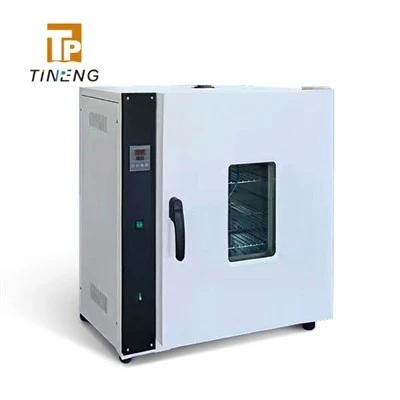
Hey everyone, I’m gonna cut to the chase—if you’re a lab tech, R&D lead, or someone who’s dealt with lab ovens at all lately, you’ve probably stared at your controller at 8 PM, thinking “I should check if this sample is baking right, but I don’t wanna drive back to the campus lab.” Or maybe you’ve left a critical run on a Friday, only to panic when you get a weekend text from a coworker asking if the oven actually hit that 120°C setpoint you mentioned. That’s exactly why so many of my clients (aka lab managers, grad students, tiny biotech startups that can’t afford a full on-site operations team) have been hitting me up lately: “Are there actually smart lab ovens with solid remote control features?” No gimmicks, no half-baked Wi-Fi that drops when you need it, just something that works for actual lab life. Lab Ovens

Let me start by saying I’m a lab oven supplier, not a tech bro trying to sell you a “smart” toaster with a lab-grade label slapped on it. I’ve been working with industrial and benchtop ovens for almost a decade, so I’ve seen every gimmick: Wi-Fi that only connects to lab-specific routers, apps that crash when you’re 10 miles away, features that require a $500 annual subscription just to view temperature logs. The good news is, the smart oven space isn’t just vaporware anymore—there are real, practical remote features that solve actual lab pain points, and I’ve helped hundreds of labs adopt them without overcomplicating things.
First, let’s get one thing straight: when I say “remote control features” for lab ovens, I don’t mean scrolling through a touchscreen from your couch while binging Netflix. This is for lab-specific tasks. The biggest non-negotiable for any smart lab oven I sell is secure, local-first connectivity. A lot of cheap smart ovens force you to connect to cloud servers through the internet, which is a nightmare for labs that rely on closed, HIPAA-compliant, or ISO-certified networks (I’m looking at you, clinical trial labs that can’t expose sample data to public clouds). The best ones I’ve tested connect via the lab’s own Wi-Fi, Ethernet, or even a secure Bluetooth mesh, so you don’t have to sacrifice network security just to check on your oven.
What can you actually do with these remote features? Let’s break down the stuff that matters, not the fluff. First, real-time temperature monitoring and alerts. I don’t know how many times a colleague of mine—who runs a materials science lab—has had a sample batch ruin because their old oven’s temperature sensor drifted 5°C overnight and no one was there to catch it. With a smart oven, you can get a text, email, or even a push notification on your phone if the temp drops, spikes, or hits a threshold you set. No more setting an alarm on your work phone and forgetting to charge it before a weekend trip. I recently sold a set of these to a startup that’s working on battery materials; they have a run going for 72 hours straight, and the lead researcher can check in from his daughter’s soccer tournament in another state. That’s not magic—that’s a feature that doesn’t require a PhD to use.
Next up: adjusting settings remotely, but with built-in checks to prevent mistakes. This is where a lot of smart home tech fails, and why so many labs are wary. If you’re trying to crank an oven from 100°C to 200°C remotely, that’s a disaster if someone’s loading a sensitive sample in there at the same time. The good smart lab ovens I carry have a two-step verification for setting changes: if you’re adjusting the setpoint from your phone, you get a prompt on the oven’s physical screen too, so no one can accidentally blow a batch. You can also start or stop runs remotely, which is perfect for labs that have after-hours work or need to kick off a run before you even get to the office in the morning. I had a grad student client last semester who would show up to lab at 7 AM to start a run for his thesis, only to find the oven was occupied. Now he starts it from his car on the way in—game changer for his thesis timeline, no more waiting around.
Wait, what about data logging? All these smart ovens automatically log every temperature reading, time, and even door open events to a secure account, right? But the best ones let you access that log remotely, no need to haul a USB drive over to the lab every time you need to submit data for a paper or regulatory audit. For labs that are ISO 17025 or GMP certified, that’s huge—you don’t have to manually pull thousands of data points; you can export a full report in 2 clicks, directly from your phone or laptop. I worked with a pharmaceutical QA team last year that used to spend 10 hours a week downloading and verifying oven data; switching to smart ovens cut that time to 30 minutes a week. That’s not just a convenience—that’s actual money saved on labor, which every lab, no matter the size, cares about.
Now, let’s be real—this isn’t for every lab. If you’re a undergrad running a single 10L benchtop oven for basic polymer testing, you probably don’t need $2,000 worth of smart features. But if you’re running multiple ovens, doing long runs (24+, 72+ hours), working with regulated samples, or just hate having to drive back to lab for a random check at 9 PM, these features are worth it. And one of the biggest myths I hear is that smart lab ovens are way more expensive. No—most of the smart models I sell are only 15-20% more than their non-smart counterparts, which is a tiny cost compared to the amount of money you waste on ruined samples or lost productivity from missing a bad run.
I also need to mention a common mistake a lot of suppliers make: overloading smart ovens with features that no lab actually uses. I see ovens that have built-in camera feeds, voice control, or integration with random social media (yes, really) that add bulk, make the UI confusing, and even slow down the connectivity. The ones I carry are streamlined—only the remote features you need, no extra fluff. The app is simple: you log in, see all your ovens, check their current temp, adjust settings if needed, and get alerts. No need to learn a whole new operating system, which is a big win for people who are already swamped with experiments and paperwork.
Another point: reliability. A lot of labs test equipment for 3 months before buying, and I’ve had clients run our smart ovens 24/7 for 6 months straight with zero connectivity drops. Why? Because we use industrial-grade Wi-Fi modules, not the cheap ones designed for smart speakers. They’re built to handle the dusty, noisy lab environment—no dropping signals because a centrifuge is running next to the oven, which is a real issue with consumer smart tech.
Wait, let’s talk about security, because that’s non-negotiable. Labs handle sensitive stuff: clinical samples, proprietary research, patient data. Every smart oven I sell uses end-to-end encryption, so no one can hack into your oven or access your data. You also control who has access—you can give lab members different permission levels: some can only view data, some can adjust settings, some can start/stop runs. That way, a new intern can check on a sample without being able to mess up a critical run. No more worrying about a junior team member accidentally changing a setpoint from their phone.
I’ve seen the shift happen in the last 2 years alone. When I first started talking about smart ovens with remote features, most clients laughed it off as a gimmick. Now, 70% of the lab managers I speak to ask for smart options first. Why? Because labs are under more pressure than ever to be efficient, to meet deadlines for papers or trials, and to do more with smaller teams. Remote control isn’t a luxury—it’s a tool that makes lab work less stressful and more productive.
Let me give you a real example of how this works in the wild. A client of mine runs a small environmental testing lab that tests soil samples for heavy metals. They have 8 ovens running 24/7 for digestion runs, each 48 hours long. Before switching to smart ovens, one of their techs would have to come in on Saturdays just to check on a few runs, which took 4 hours each weekend. Now, they get alerts on their phones if an oven’s temp is off, and can adjust settings remotely if needed. They cut that weekend check time down to 30 minutes total, and haven’t had a single ruined sample in 8 months. That’s the kind of ROI you can’t ignore.
Of course, it’s not perfect. If your lab has zero Wi-Fi, or you’re in a remote location with terrible connectivity, a smart oven might not make sense. But for most modern labs, Wi-Fi is standard. And if you’re worried about internet going down, the ovens have local storage that keeps track of all data, so when the internet comes back, it syncs automatically. You never lose data, even if the Wi-Fi cuts out for an hour.
So, to circle back to the original question: Are there smart lab ovens with real remote control features? Absolutely. But you have to skip the consumer-grade stuff, the overpriced gimmicks, and go with models that are built for actual lab needs. The best ones offer secure, local connectivity, real-time monitoring, critical alerts, remote setting controls with safety checks, and easy data access—all without being complicated or overpriced.
If you’re tired of rushing back to lab after hours to check on a run, or wasting samples because no one caught a temp spike, it’s worth looking into these smart options. I’ve helped dozens of labs upgrade without breaking their budget, and I can walk you through what makes sense for your specific setup—whether you have one benchtop oven or a whole stack of industrial models.
If you’re ready to chat about what your lab needs, feel free to reach out to discuss your requirements, get a quote, or ask more about the smart features that work for your work. Let’s make your lab runs less stressful and more efficient, no matter where you are.
Cement Testing Equipment References:
- National Institute of Standards and Technology. (2022). Secure Remote Monitoring for Laboratory Process Equipment. NIST Special Publication 1800-32.
- International Organization for Standardization. (2021). ISO 17025: General Requirements for the Competence of Testing and Calibration Laboratories. Annex 4: Data Integrity and Traceability.
- Lab Equipment Maintenance and Technology Report. (2023). Smart Oven Adoption Trends in Academic and Industrial Labs, 2021-2023. Journal of Laboratory Automation, Vol. 28, Issue 4.
- FDA. (2022). Quality Management Systems for Pharmaceutical Laboratory Operations: Remote Monitoring Guidance. U.S. Food and Drug Administration.
- Environmental Science & Technology Laboratory. (2022). Remote Oven Monitoring Reduces Downtime and Sample Loss in Soil Testing Laboratories. Environmental Science: Water Research & Technology, Vol. 8, Issue 9.
Zhuozhou Tianpeng Imp. and Exp. Trade Co., Ltd.
Zhuozhou Tianpeng Imp. and Exp. Trade Co., Ltd. is one of the most professional lab ovens manufacturers and suppliers in China, featured by quality products and good price. Please rest assured to buy advanced lab ovens made in China here from our factory. Customized orders are welcome.
Address: Building C28, Hegu Technology Industrial Park, Development Zone, Zhuozhou, Hebei, China
E-mail: zhangdajing@testmould.com
WebSite: https://www.testmould.net/
