Hey there! I’m a supplier of transmitters, and today I wanna chat about the applications of a microwave transmitter. Microwave transmitters are pretty cool gadgets, and they’ve got a whole bunch of uses in our daily lives and various industries. Transmitter
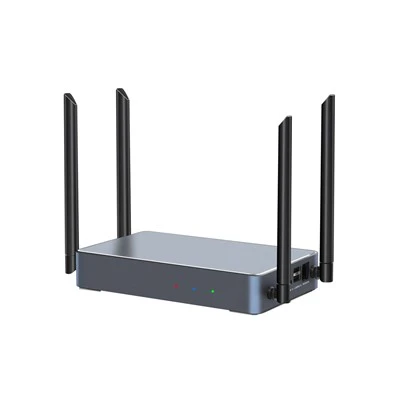
Let’s start with the telecommunications field. Microwave transmitters are the backbone of wireless communication. They’re used to send signals over long distances without the need for physical cables. For example, in mobile networks, microwave transmitters are installed on cell towers. These towers use microwave frequencies to communicate with our smartphones. When you make a call or send a text, your phone sends a signal to the nearest cell tower. The tower then uses a microwave transmitter to relay that signal to other towers or to the central network. This way, your message can reach its destination quickly and efficiently.
Another big application is in satellite communication. Satellites are equipped with microwave transmitters to send and receive data to and from Earth. They can transmit TV signals, internet data, and even weather information. For instance, when you watch your favorite satellite TV channel, the signal is first sent from a ground station to a satellite using a microwave transmitter. The satellite then re – transmits the signal back to Earth, where it’s picked up by your satellite dish. Without microwave transmitters, satellite communication as we know it wouldn’t be possible.
In the field of radar systems, microwave transmitters play a crucial role. Radar works by sending out microwave signals and then analyzing the echoes that bounce back. Air traffic control uses radar systems to track the position and movement of aircraft. The microwave transmitter in a radar system sends out a short burst of microwave energy. When this energy hits an object, like an airplane, some of it is reflected back to the radar receiver. By measuring the time it takes for the echo to return and the frequency shift of the signal, the radar can determine the distance, speed, and direction of the object. This helps air traffic controllers keep the skies safe.
Microwave transmitters are also used in the medical field. In a treatment called microwave ablation, a small microwave transmitter is inserted into a tumor. The transmitter emits microwave energy, which heats up the tumor cells and destroys them. This is a minimally invasive alternative to traditional surgery, and it can be used to treat various types of cancer, such as liver cancer and lung cancer. It’s a great example of how microwave technology can be used to improve people’s health.
In the industrial sector, microwave transmitters are used for process control. For example, in the food industry, they can be used to measure the moisture content of food products. The microwave transmitter sends out a signal, and the way the signal is absorbed or reflected by the food can tell us how much moisture is present. This helps ensure that the food products are of consistent quality. In the manufacturing of plastics and other materials, microwave transmitters can be used to monitor the curing process. By controlling the microwave energy, manufacturers can ensure that the materials are cured properly, which improves the strength and durability of the final products.
In the military, microwave transmitters have a wide range of applications. They’re used in jamming systems to disrupt the enemy’s communication and radar systems. A microwave jamming transmitter can send out a powerful signal that overwhelms the enemy’s receivers, making it difficult for them to communicate or detect targets. They’re also used in missile guidance systems. The transmitter on a missile sends out a microwave signal, and the missile uses the reflected signal to home in on its target.
Now, let’s talk about some of the advantages of using microwave transmitters. First of all, they can transmit a large amount of data at high speeds. This is really important in today’s digital age, where we need to transfer huge amounts of information quickly. Second, they can operate over long distances. Unlike some other types of communication systems, microwave signals can travel for many kilometers without significant loss of signal strength. Third, they’re relatively easy to install and maintain. You don’t need to dig up the ground to lay cables, and once they’re set up, they don’t require a lot of upkeep.
However, there are also some challenges associated with microwave transmitters. One of the main challenges is interference. Microwave signals can be affected by other electronic devices, weather conditions, and even physical obstacles. For example, heavy rain or snow can absorb or scatter microwave signals, which can lead to a loss of signal quality. Another challenge is the need for line – of – sight. Microwave signals travel in a straight line, so there can’t be any large objects blocking the path between the transmitter and the receiver.
If you’re in the market for a microwave transmitter, you’ve come to the right place. As a transmitter supplier, I’ve got a wide range of high – quality microwave transmitters to meet your needs. Whether you’re in the telecommunications, satellite, radar, medical, industrial, or military field, I can provide you with the right transmitter for your application. My transmitters are reliable, efficient, and come with excellent customer support.

If you’re interested in learning more about our microwave transmitters or want to discuss a potential purchase, don’t hesitate to reach out. We can have a chat about your specific requirements and find the best solution for you. I’m always happy to help and look forward to working with you.
Transmitter References:
- "Microwave Engineering" by David M. Pozar
- "Telecommunication Systems Engineering" by John G. Proakis and Masoud Salehi
- "Medical Applications of Microwaves" by John L. Volakis and Steven A. Tjarks
Shenzhen TranScreen Technology Co., Ltd.
As one of the most professional transmitter manufacturers and suppliers in China, we have world-leading production equipment and strong manufacturing capabilities. Please feel free to buy customized transmitter made in China here from our factory. Contact us for quotation.
Address: No. 168, Baoyuan Road, Baoan Dst., SZ, China
E-mail: inquiry@transcreen.com
WebSite: https://www.transcreen.com/
